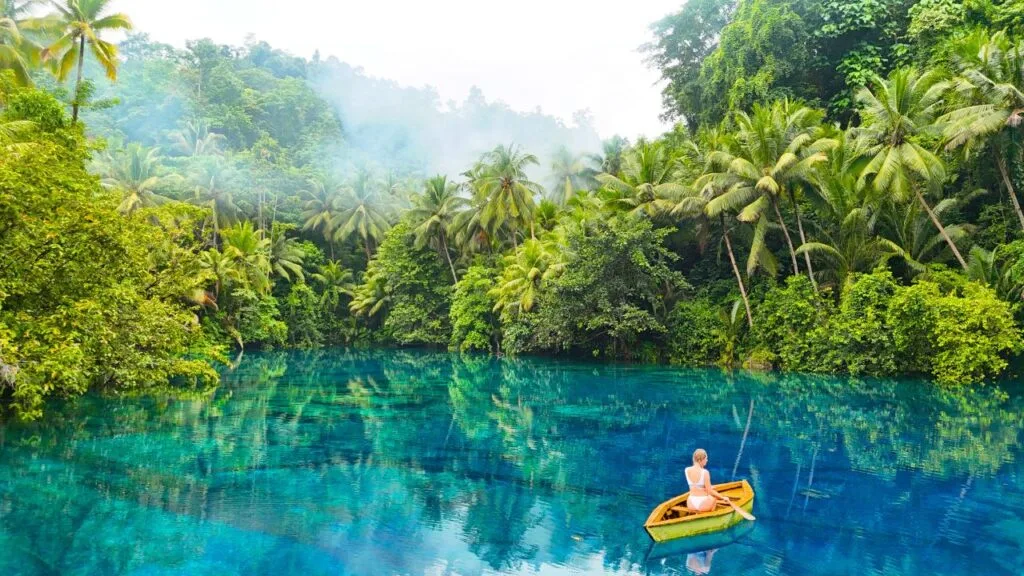


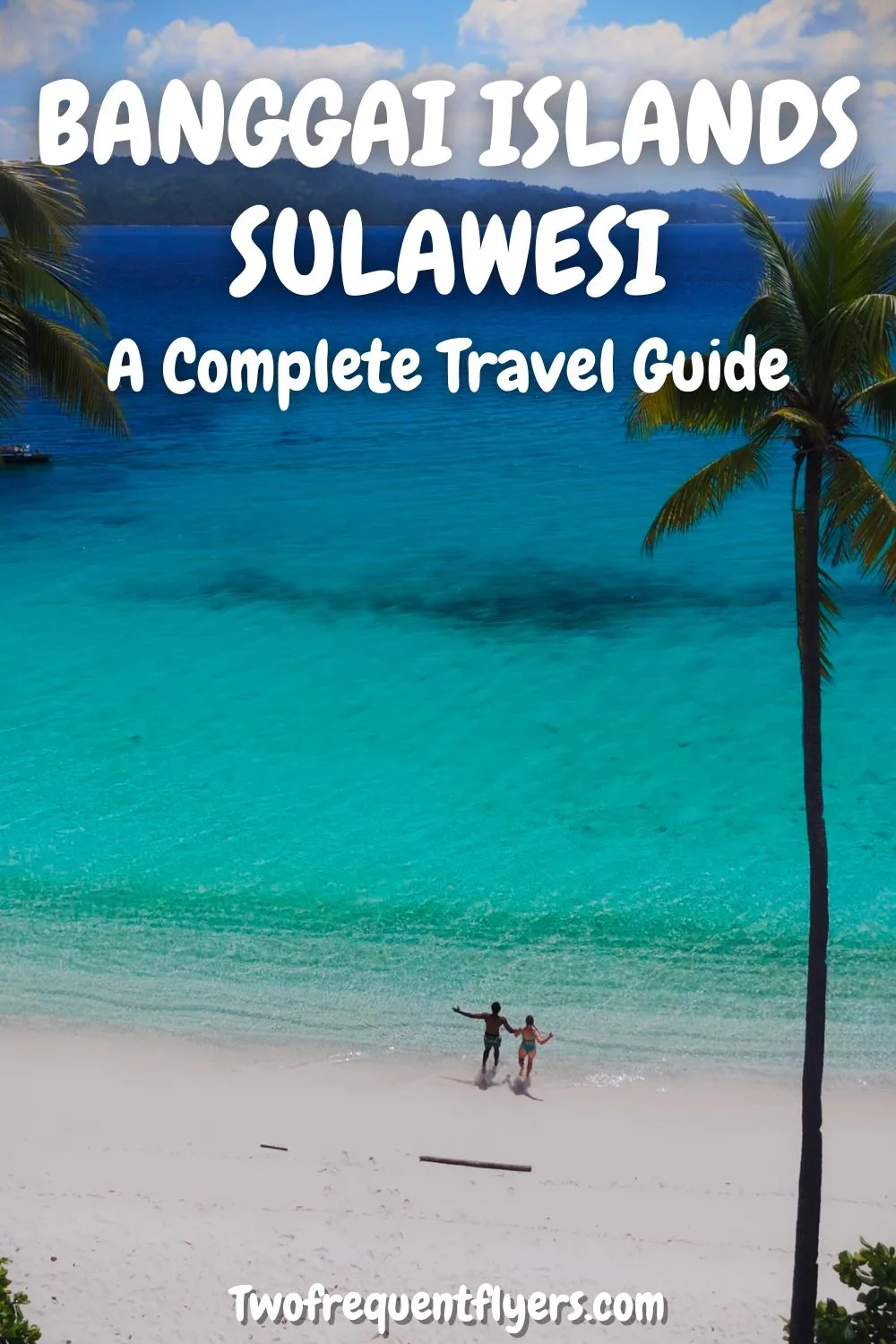
The Banggai Islands completely stole our hearts.
Before this trip, we’d spent months travelling around Indonesia, visiting famous places like Bali, Java and Lombok. But everyone kept telling us that if we wanted to experience a side of Indonesia that most international tourists never see, we needed to head to Central Sulawesi.
So that’s exactly what we did.
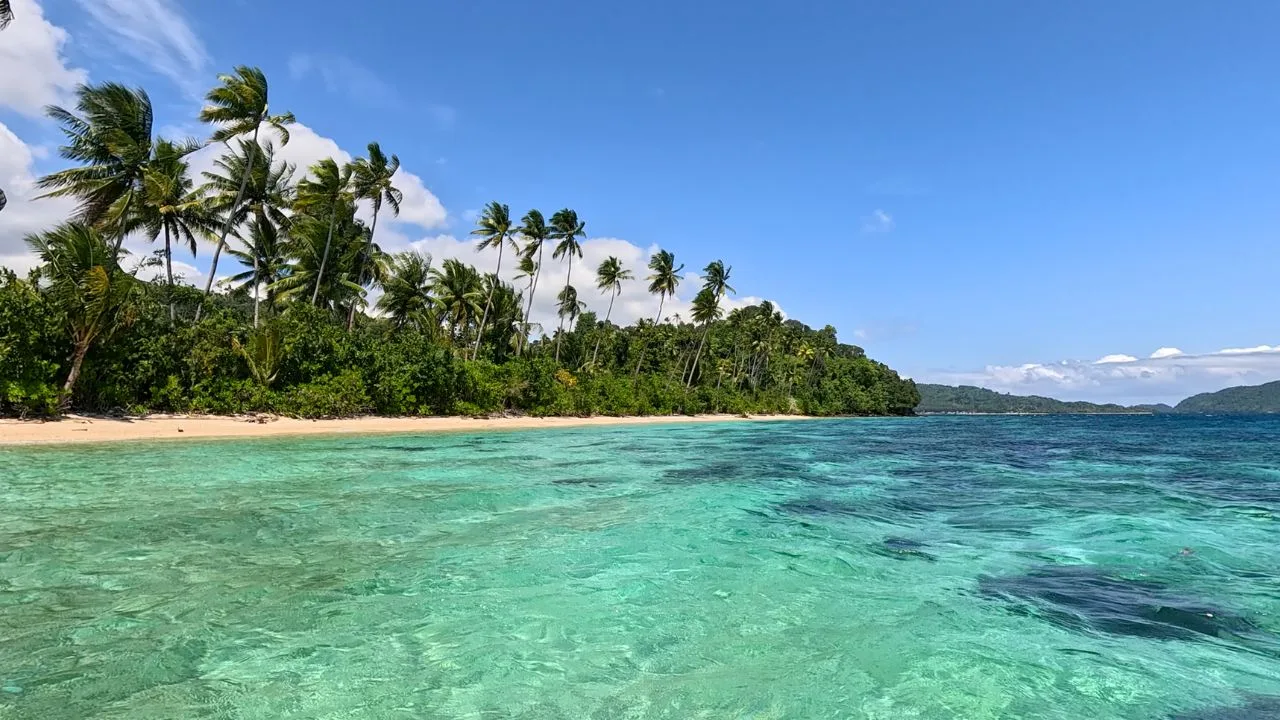
Getting there certainly wasn’t straightforward. It involved delayed flights, a four-hour ferry ride, changing plans on the go, and embracing island time. But every extra bit of effort was rewarded with some of the friendliest people we’ve ever met, deserted white-sand beaches, crystal-clear water and some of the most incredible untouched landscapes.
If you’re planning your own trip to the Banggai Islands, this guide combines our honest experience with everything we wish we’d known before we visited!
Watch Our Full Journey To The Banggai Islands
From Bali to the Banggai Islands
One of the first things we learnt about travelling to the Banggai Islands is that the journey is just as much a part of the adventure as the destination itself.
Unlike Bali or Jakarta, you can’t simply jump on one flight and arrive a couple of hours later. Reaching the Banggai Islands takes a little patience and a lot of planning, but that’s also one of the reasons they remain so wonderfully unspoilt.
Our adventure began in Denpasar, Bali.
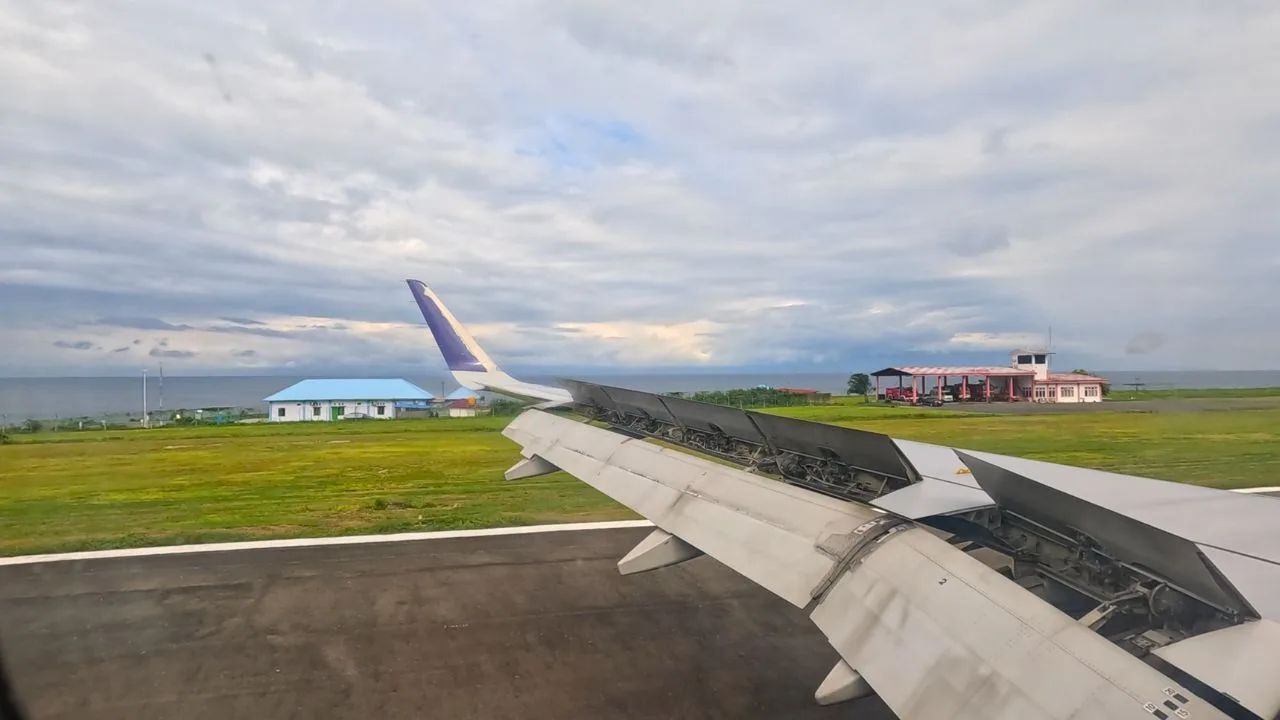
From there, we flew to Makassar before catching a second domestic flight to Luwuk across Sulawesi. From Luwuk, we then boarded a ferry across to Salakan on Peleng Island, which became our base for exploring the Banggai Islands.
If that sounds like quite a journey…that’s because it is.
But we’d honestly recommend embracing it rather than rushing through it.

Pin It On Pinterest
Expect Delays (And Don’t Panic!)
One of the biggest lessons we learnt almost immediately was that transport in this part of Indonesia doesn’t always run to a strict timetable.
Our first flight from Bali was delayed for long enough that we genuinely thought we’d miss our connection to Luwuk.
By the time we landed, we were running through the airport with only minutes to spare.
Thankfully, the second flight had also been delayed.
For what was probably the first time in our lives, we were actually celebrating seeing a delayed departure board.
The same goes for the ferries.
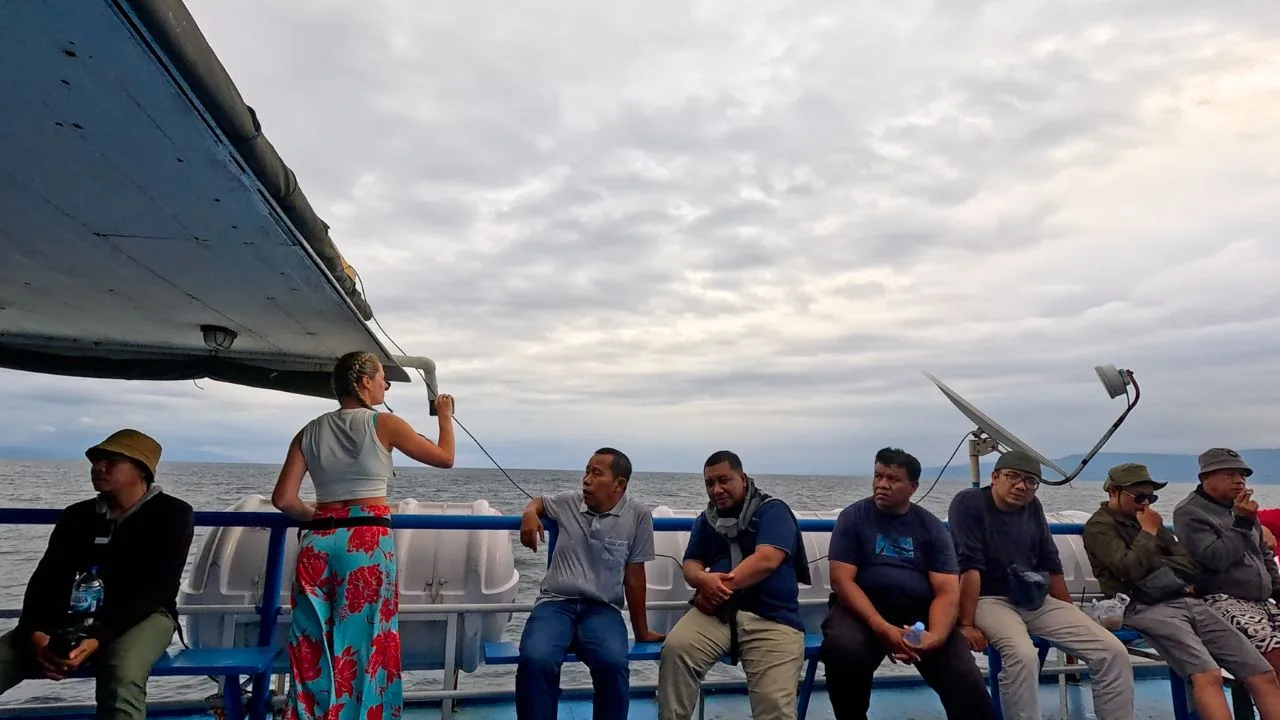
Although there are scheduled departures between Luwuk and the Banggai Islands, they’re much more flexible than you might be used to if you’ve travelled around places like Europe.
Rather than trying to build a minute-by-minute itinerary, we’d really recommend giving yourself plenty of breathing room.
If you’re planning a trip here, don’t schedule a ferry five minutes after your flight lands, or a flight home immediately after your return ferry.
Build flexibility into your itinerary.
You’ll enjoy the experience so much more. That’s just part of travelling somewhere this remote.
Getting The Ferry To Salakan
From Luwuk, we made our way to the ferry terminal before boarding the local ferry across to Pelabuhan Laut Salakan port.
If you’re planning to explore many of the places we’ll be sharing throughout this series, including Oyama Beach, Tanjung Gundul and Paisu Pok Lake, we’d actually recommend arriving into Salakan rather than some of the other ports on Peleng Island.
Although the crossing is slightly longer, it leaves you much closer to many of the Banggai Islands’ most beautiful attractions.
Another useful thing to know is that ferry tickets aren’t always easy to book online.
Many travellers simply purchase them at the port before departure, so it’s worth arriving early and allowing yourself plenty of time.
Our Surprisingly Brilliant Ferry Experience
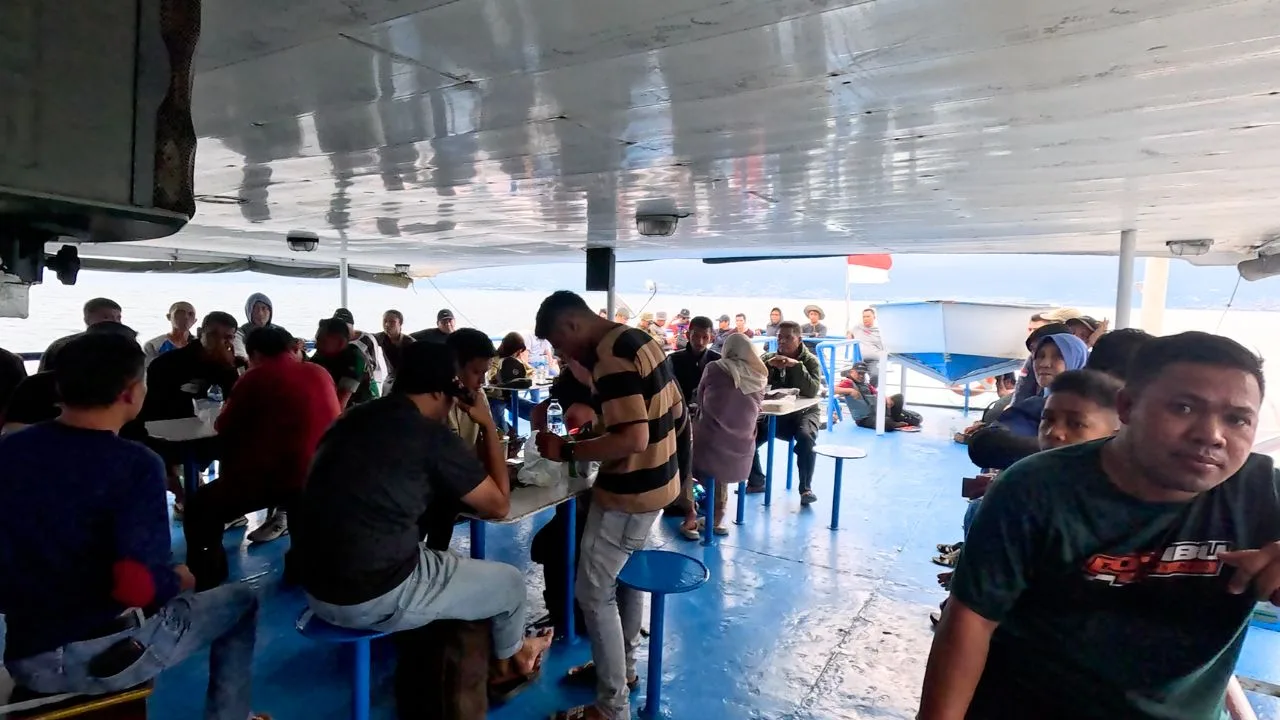
The ferry crossing itself takes around four hours.
You can choose between economy or private cabins.
Private cabins were occupied by government officials on the day we travelled, so we booked economy instead.
To be honest… we’re actually really glad we did.
Almost immediately after boarding, locals began smiling, waving and saying hello.
It quickly became obvious that international tourists don’t visit this part of Indonesia very often.
Everyone was curious, incredibly welcoming and genuinely excited to chat, in our opinion, this is part of what makes travelling to places that sit a little further off the typical tourist trail so lovley! We would not have had this experience if we were in a private cabin.
Economy class was also incredibly affordable. It cost around 70,000 IDR per person.
Instead of individual seats, the economy area is made up of large communal sleeping platforms where everyone settles in together for the crossing.
Before boarding, we’d taken a seasickness tablet just to be on the safe side, as we’d heard the crossing can sometimes be quite rough depending on the weather.
Fortunately, the sea was fairly kind to us.
After chatting for a while, exhaustion finally caught up with us.
Between the early start, the delayed flights and the long day of travelling, we stretched out on the sleeping platforms and had one of the best naps we’ve ever had on public transport.
If you decide to stay awake instead, keep an eye out over the water.
Locals told us dolphins are sometimes spotted swimming alongside the ferry!
Are You Keeping Up With Our Indonesia Series?
Check out our full collection of Indonesia Experiences
Arriving In Salakan
By the time our ferry pulled into Salakan, the sun had already set.
Even though it was late, the welcome couldn’t have been warmer.
When we stepped off the ferry, people were smiling, waving and calling out Hello.
The atmosphere immediately felt different to some of Indonesia’s larger cities.
Everything was slower, friendlier and more relaxed.
It genuinely felt like we’d arrived somewhere that tourism still hasn’t changed.
After collecting our bags, we jumped into a car and headed towards our hotel for the night.
We stayed at Wisma Salakan, which we’d happily recommend if you’re looking for a comfortable and affordable base while exploring this part of the Banggai Islands.
Accommodation options here are much more limited than you’ll find in Bali or Java, so knowing a few reliable places in advance can really help when planning your trip.
After checking in and freshening up, we headed out for dinner at a lovely waterside restaurant.
One thing we were really pleased to discover was that, despite how remote the area feels, there were still plenty of options for both of us.
Beth found delicious vegetarian dishes including tofu, tempeh, vegetables and rice, while Denz enjoyed some of the freshest fish imaginable.
Considering we were eating beside the sea, it had almost certainly been caught that very day.
It was the perfect end to a very long travel day.
Before heading back to the hotel, we made one final stop at Kopi Teman, a brilliant little coffee shop in Salakan that we’d definitely recommend visiting if you’re staying in the area.
We grabbed a coffee, soaked up the atmosphere and started getting excited for what lay ahead.
The following morning we’d be setting off to explore some of the Banggai Islands’ most spectacular beaches, hidden coves and limestone landscapes.
And after everything it had taken just to get here… we couldn’t wait.
Our Travel Insurance ❤️🩹
We use Safety Wing! The perfect travel insurance for adventure travellers! You pay a monthly subscription, which you can pause when you go back home, AND you can take out the insurance while you are already abroad!! Which is SUCH an awesome feature!
Island Hopping Around The Banggai Islands
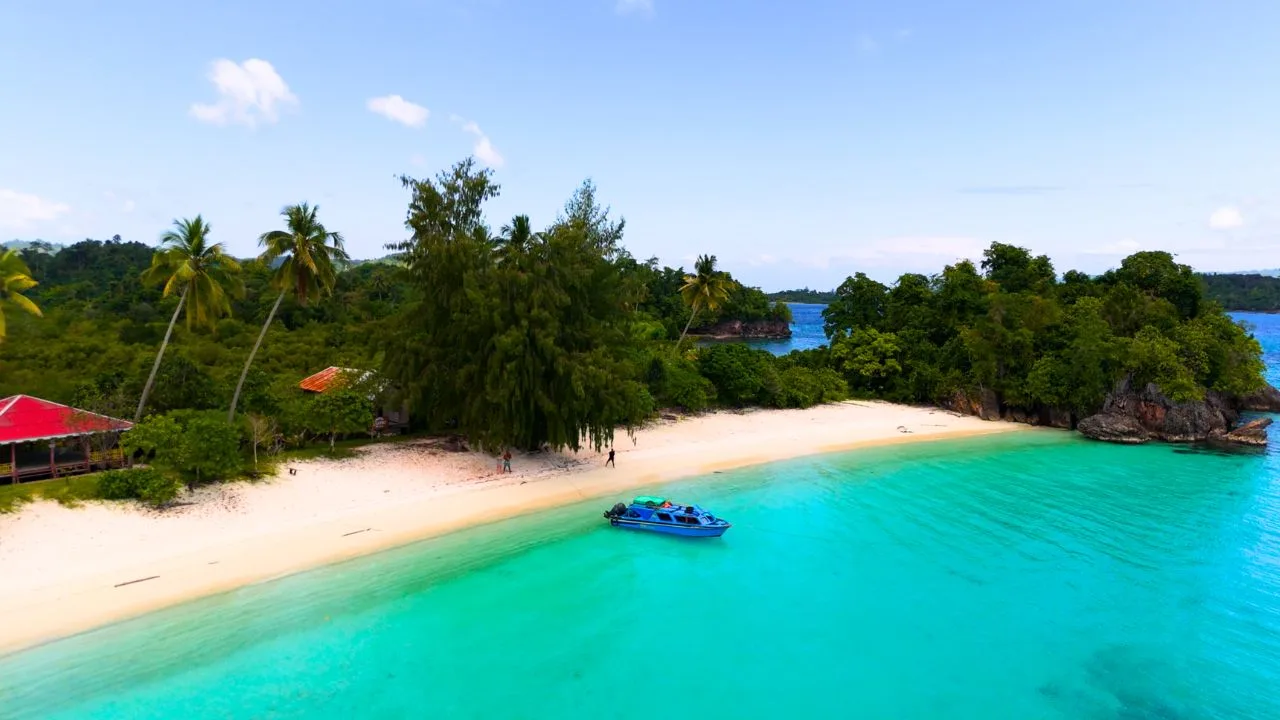
After an early night in Salakan, today was the day we’d been looking forward to ever since we started planning this trip.
The Banggai Islands are made up of dozens of islands scattered across some of the bluest water we’ve ever seen, and many of the most beautiful places can only be reached by boat. Unlike more touristy destinations in Indonesia, there aren’t queues of tour boats leaving every morning or rows of beach clubs waiting to welcome you. This felt like genuine exploration.
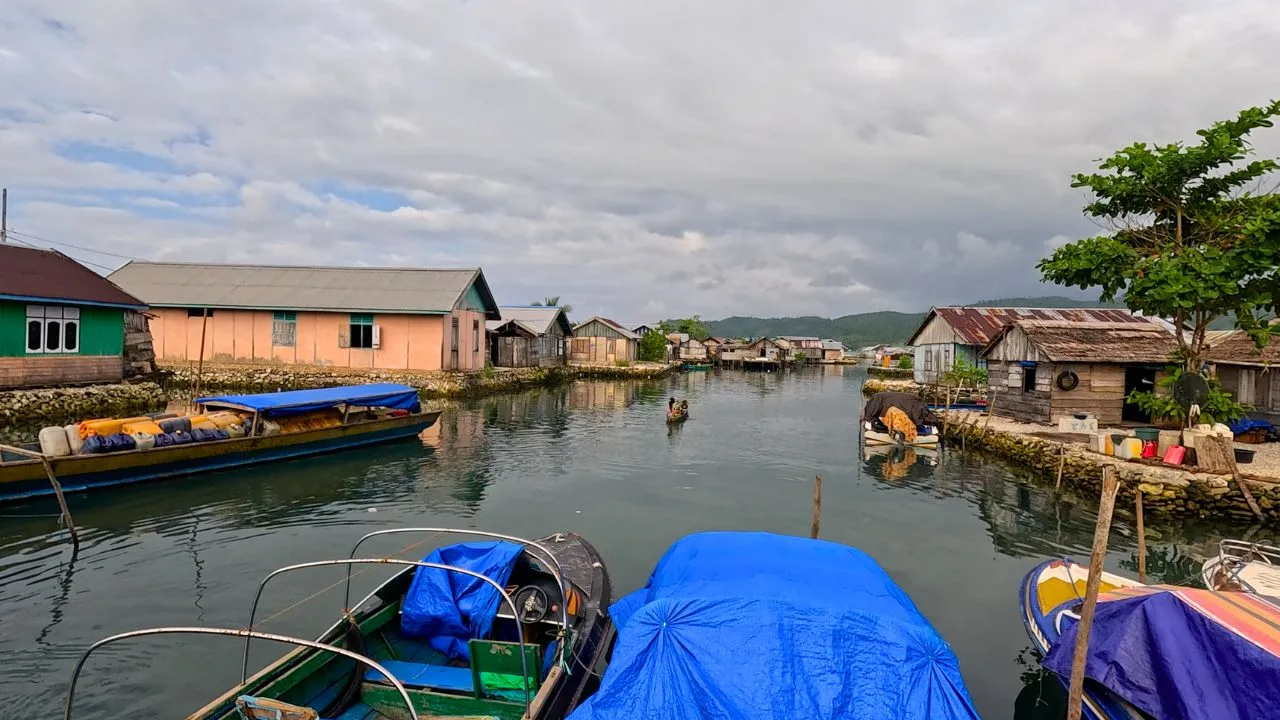
After breakfast, we set off by car towards a small Bajo community, where our local boat and captain were waiting for us.
The Bajo people, sometimes called the “Sea Nomads”, have lived alongside the ocean for generations and have an incredible connection with the sea. Watching them navigate these waters so effortlessly made us realise just how little we knew about this part of Indonesia.
Once we’d climbed aboard our traditional outrigger boat, it was time to begin exploring.
If you’re planning to visit the Banggai Islands independently, we’d highly recommend arranging a local boat for the day. It’s by far the easiest way to reach many of the beaches and limestone formations that make this area so special, and having a local guide means you’ll often discover places that never appear in guidebooks.
Our Travel Insurance ❤️🩹
We use Safety Wing! The perfect travel insurance for adventure travellers! You pay a monthly subscription, which you can pause when you go back home, AND you can take out the insurance while you are already abroad!! Which is SUCH an awesome feature!
Tanjung Gundul
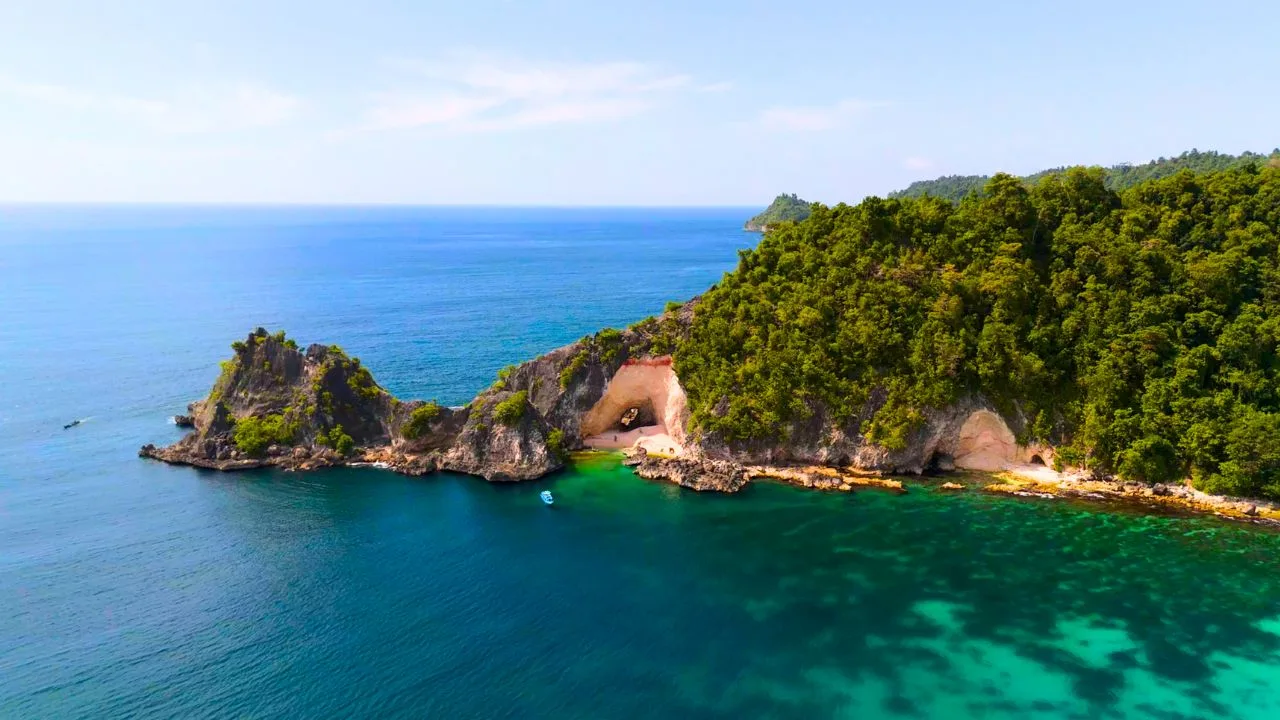
Our first stop was Tanjung Gundul, and what an introduction it was.
The journey took around 45 minutes to an hour by boat, giving us plenty of time to admire the tiny islands, limestone cliffs and impossibly clear water surrounding us.
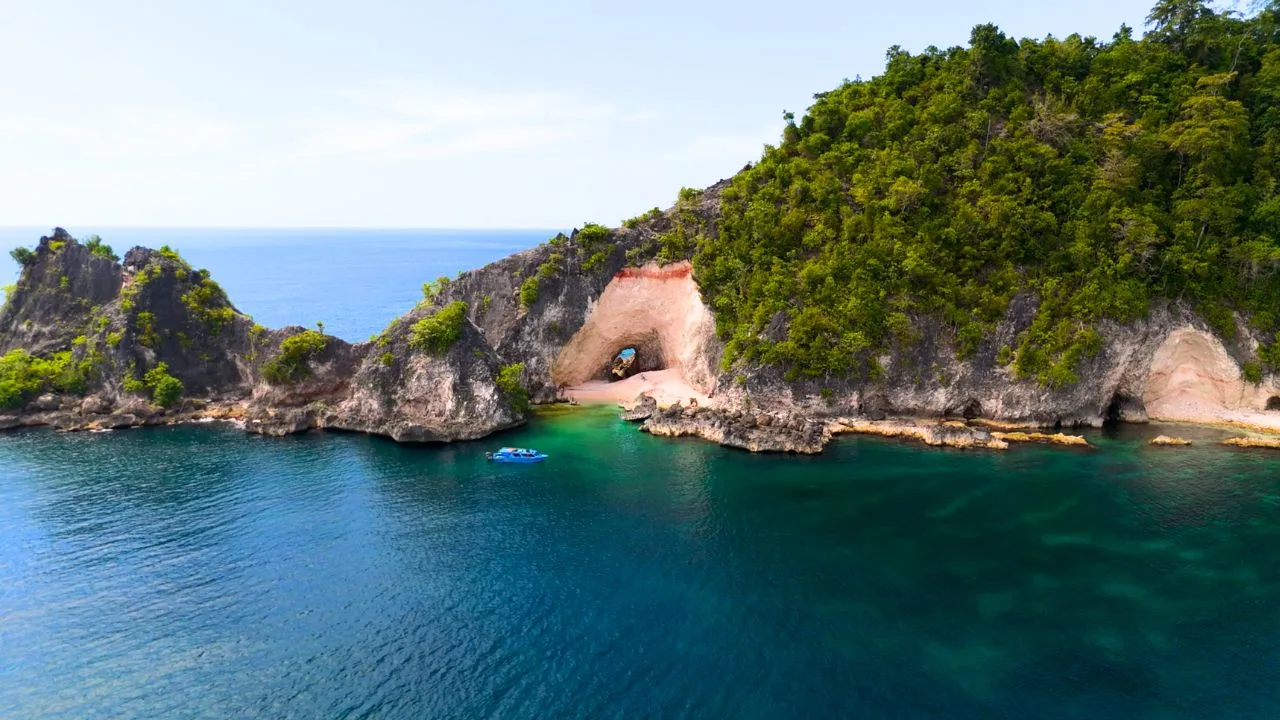
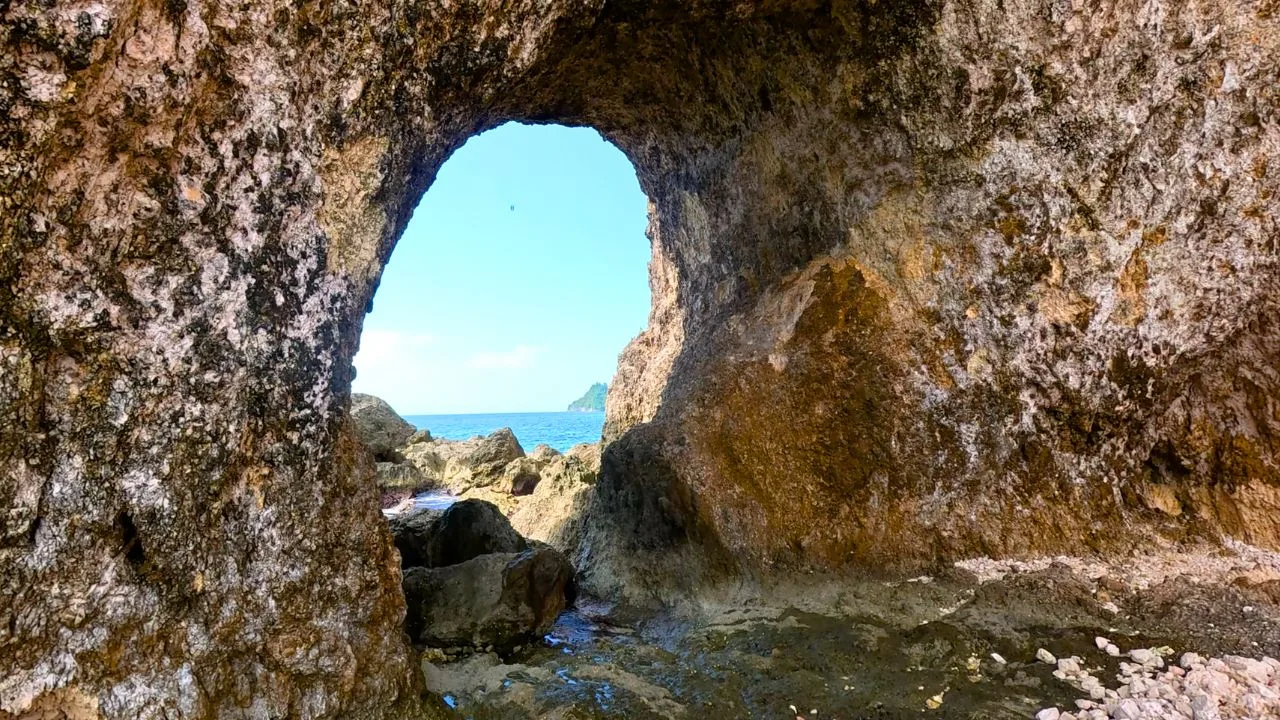
As we approached, one enormous limestone wall slowly came into view.
Carved into the cliff is a huge natural opening, creating one of the most recognisable landmarks in this part of the Banggai Islands.
It reminded us of parts of Cornwall back home in the UK, mixed with the dramatic limestone scenery of Nusa Penida in Bali.
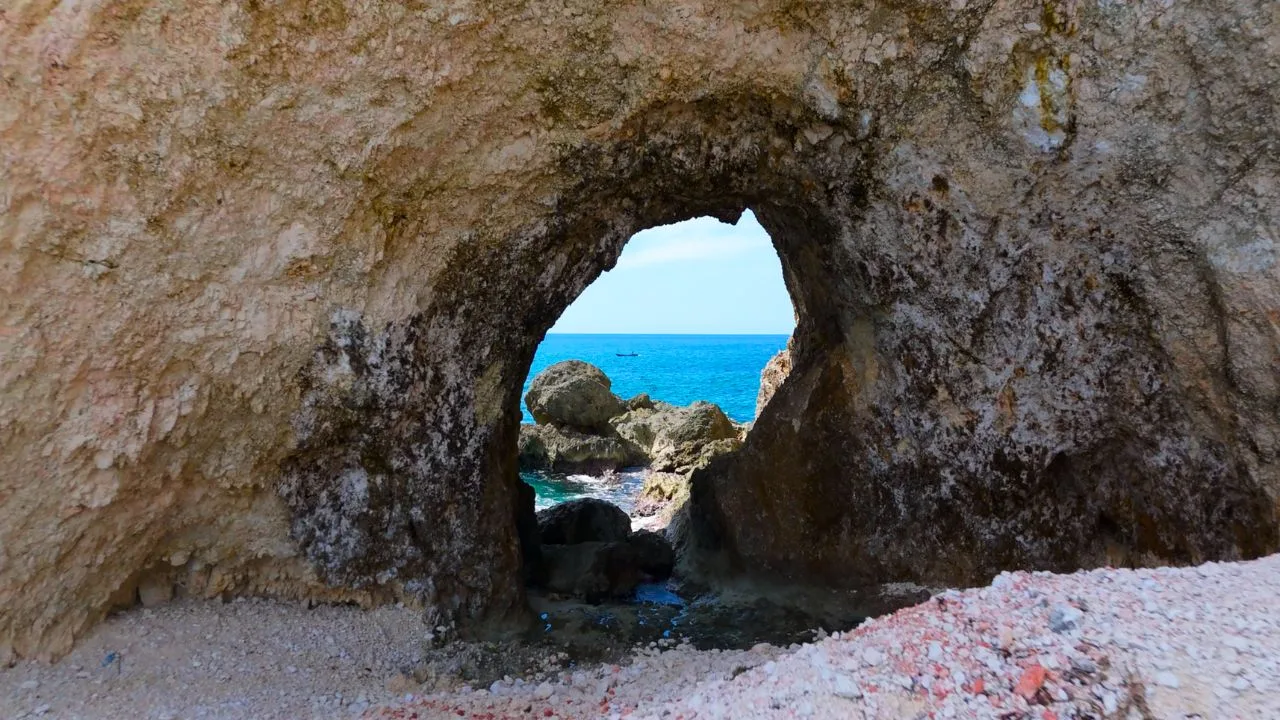
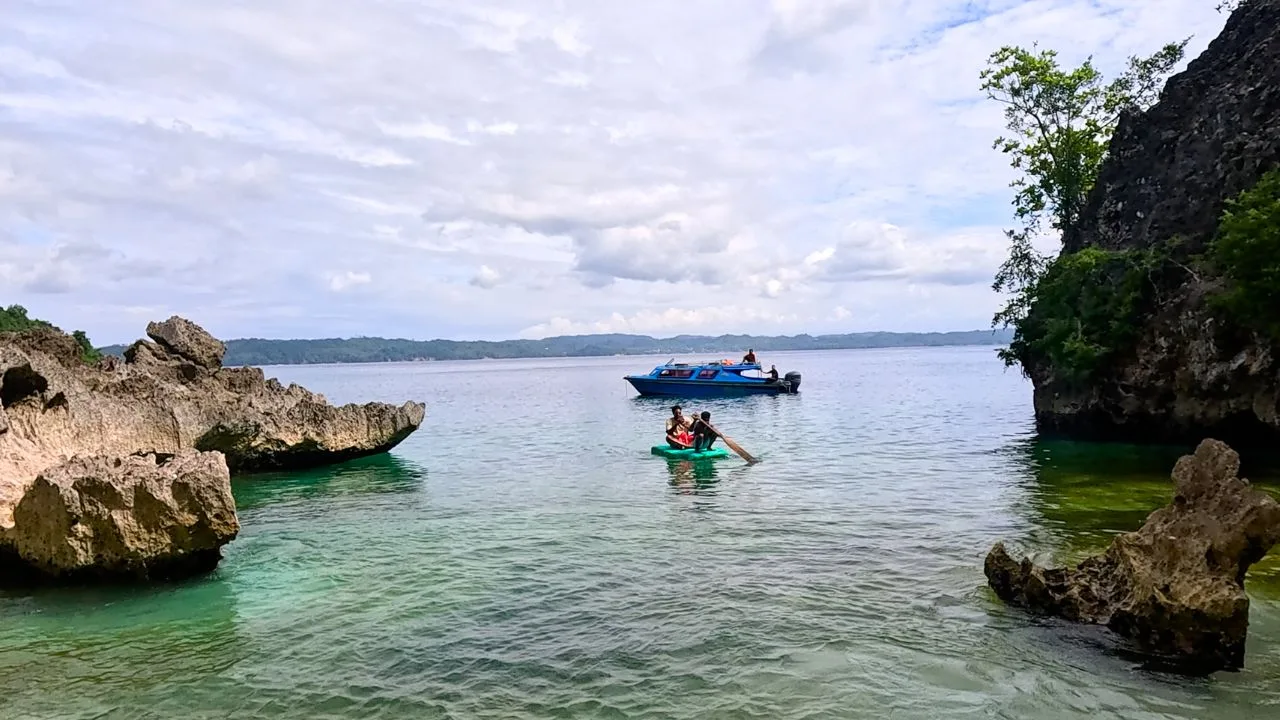
Getting ashore was an adventure in itself.
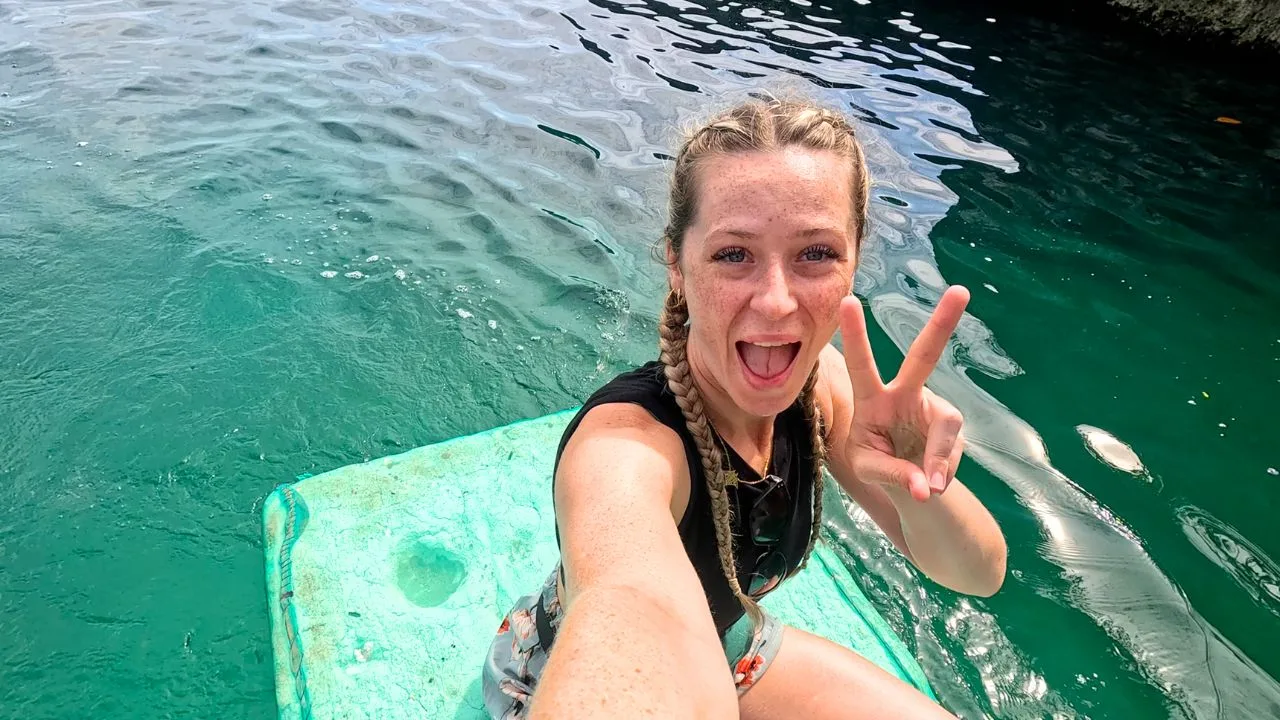
The water was too shallow for our boat to get close, so a lovely local man appeared with a tiny raft and ferried us across the final stretch.
Naturally, Denz started joking that this was the Banggai Islands’ version of Grab. No taxis. No scooters.
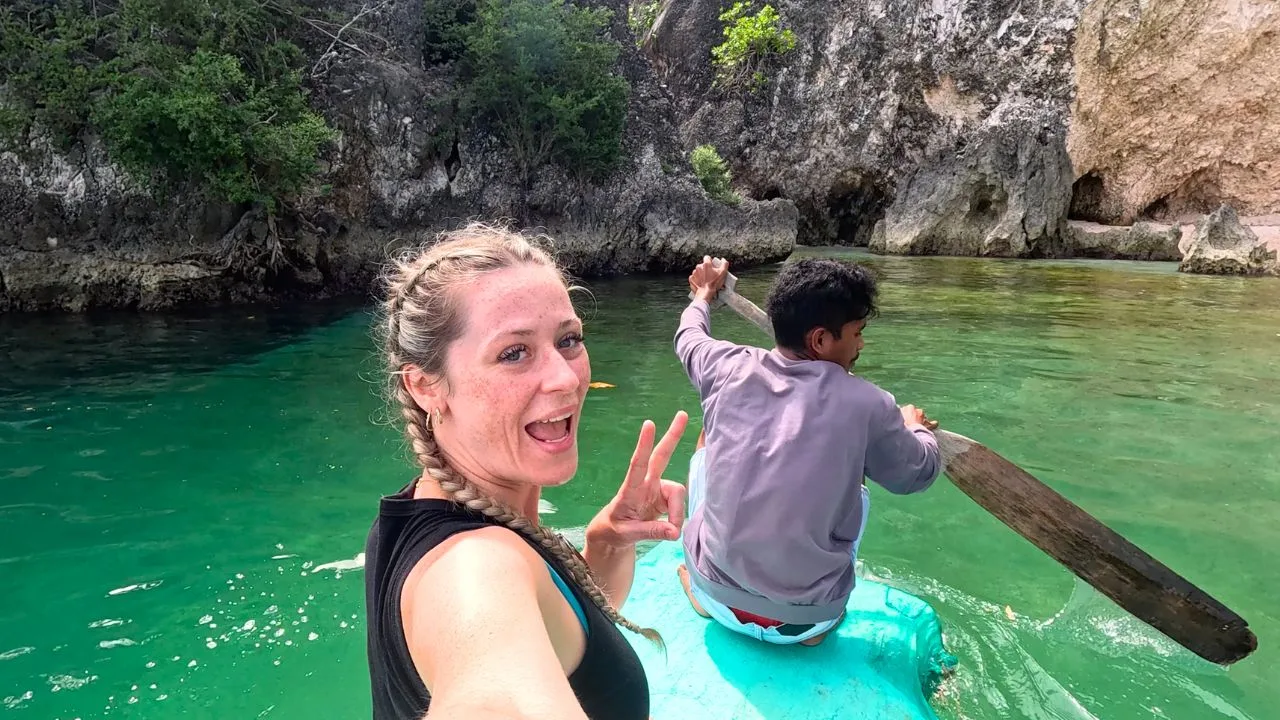
Just your own personal raft…. We absolutely loved it.
One important thing to be aware of when visiting Tanjung Gundul is that the cliffs are natural limestone formations, and landslides can happen.
A section had recently collapsed when we visited, so it’s really important to listen to your local guide, pay attention to any safety advice and avoid standing beneath unstable rock faces where possible
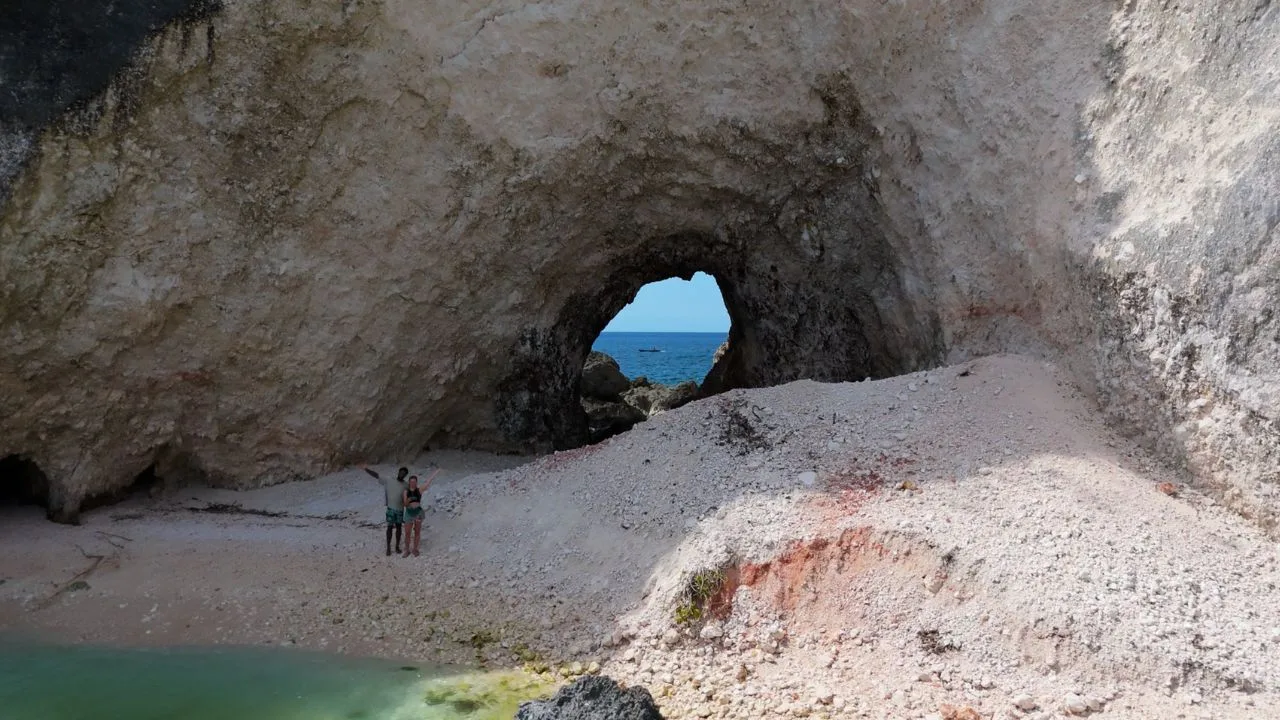
The scenery is breathtaking, but nature always deserves respect.
After spending some time taking photos and soaking up the scenes, we climbed back aboard our boat and headed towards what would become one of our favourite beaches anywhere in Indonesia.
Oyama Beach
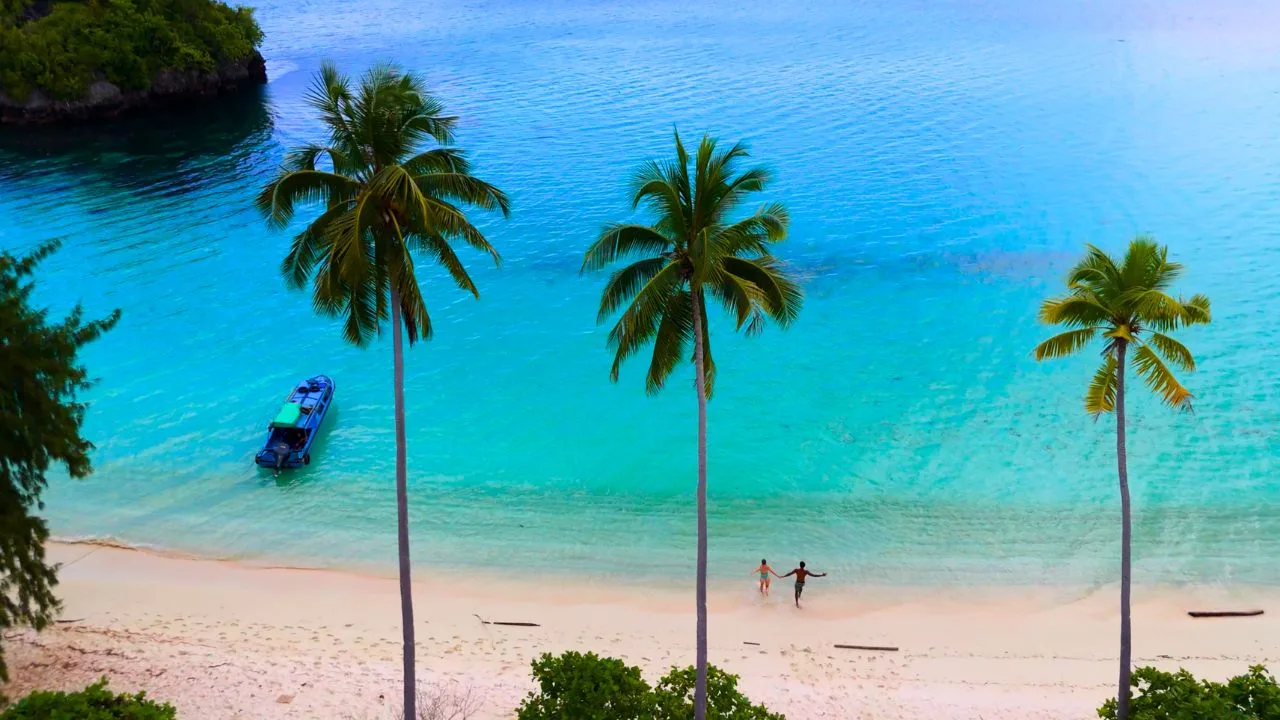
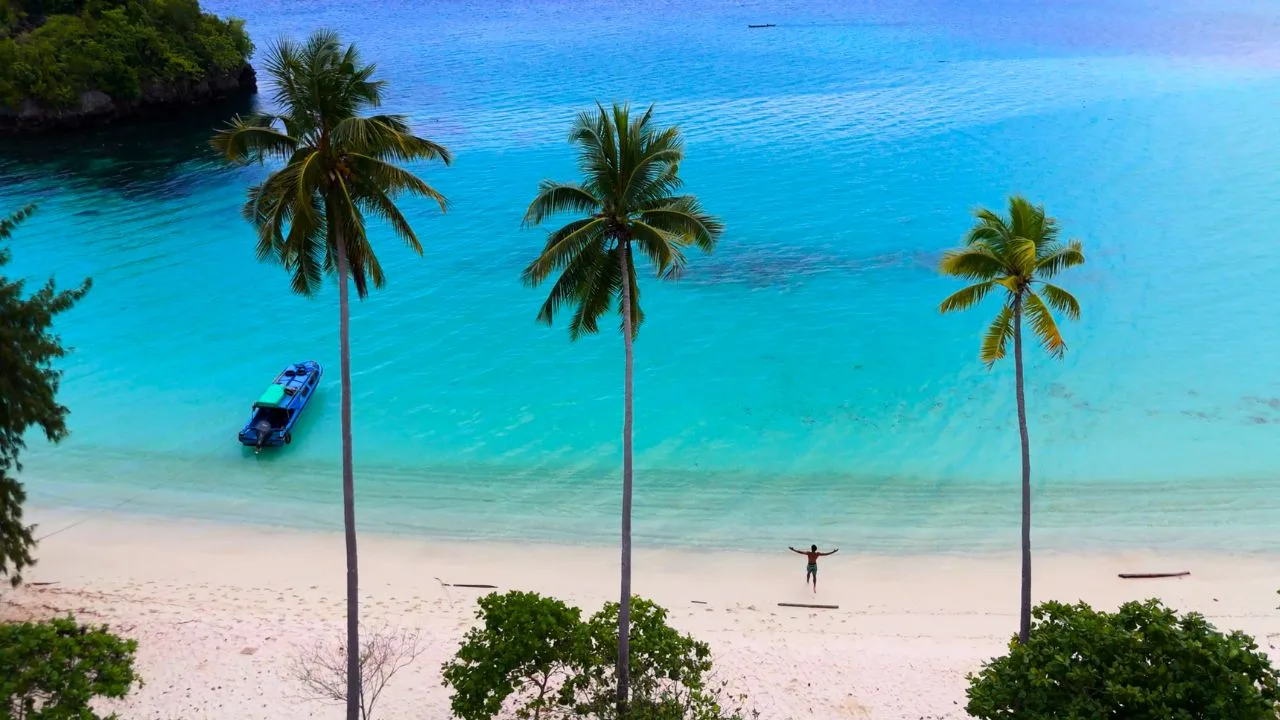
If someone asked us to picture paradise…this might be it.
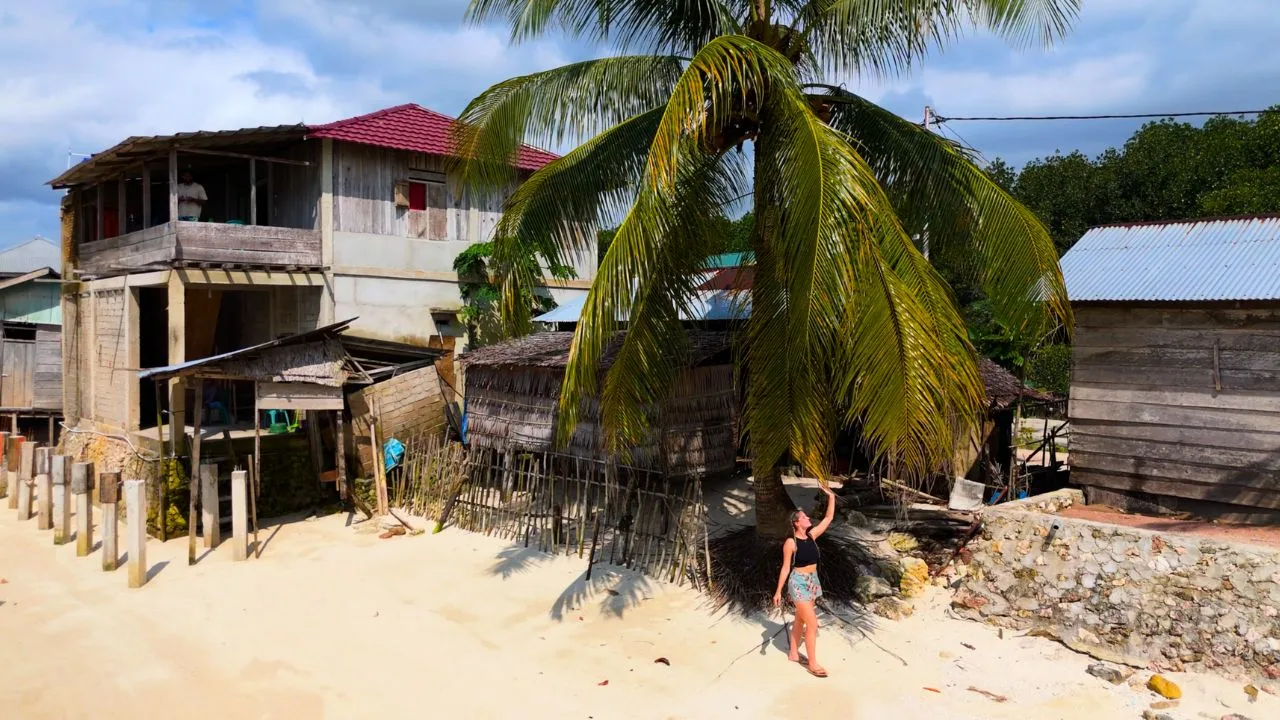
Oyama Beach is one of the best-known beaches in the Banggai Islands, and within seconds of arriving, it was obvious why.
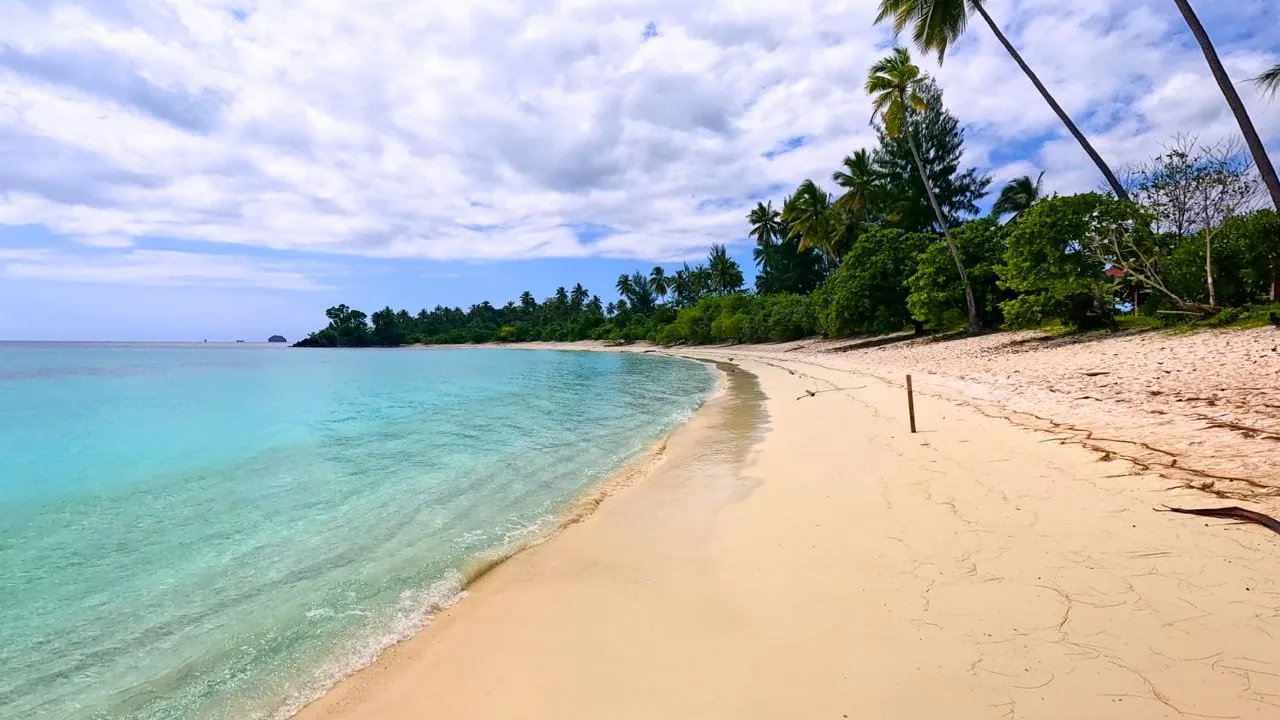
Soft white sand, Crystal-clear turquoise water, Towering coconut palms and no other tourists in sight.
We genuinely couldn’t believe we had the entire beach to ourselves.
After spending so much time travelling around Indonesia’s more popular destinations, standing on a beach like this without another soul around felt incredibly special.
We spent ages exploring, flying the drone and appreciating just how peaceful it was.
Then something happened that perfectly summed up travelling around Central Sulawesi.
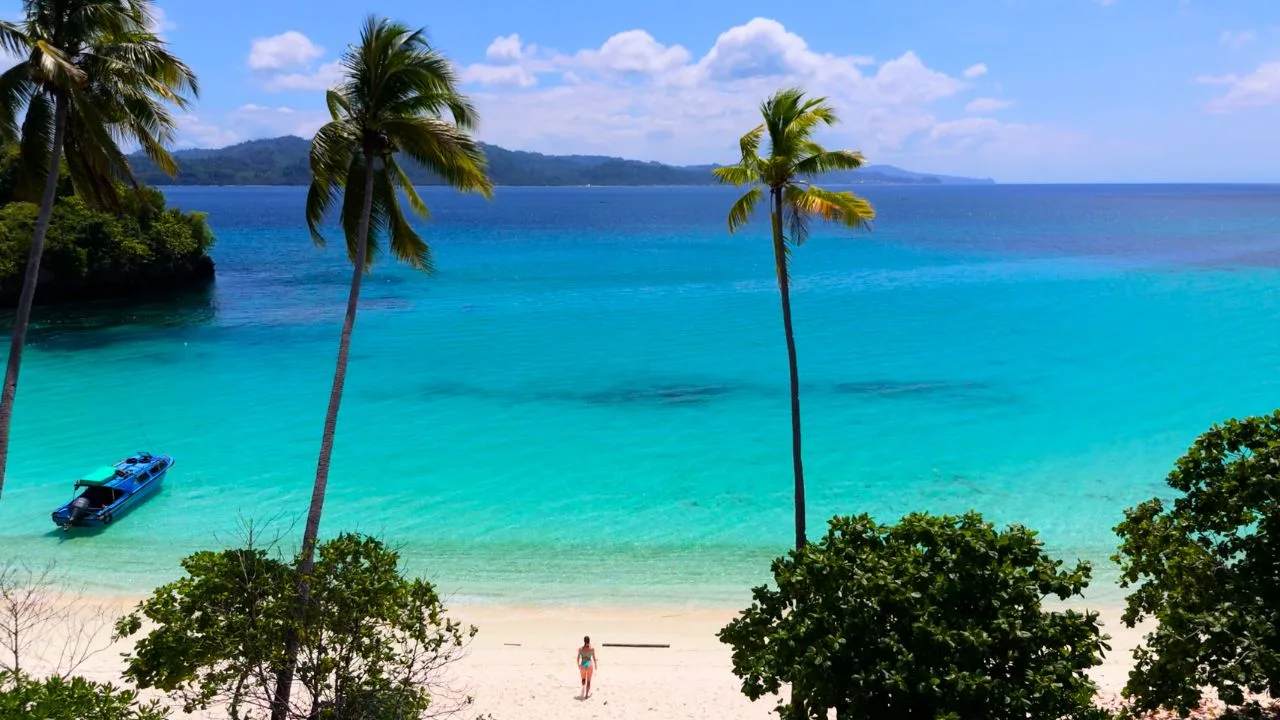
Out of nowhere, a small wooden fishing boat appeared on the horizon and slowly made its way towards us.
Then the fisherman smiled, held up a fresh squid and offered to sell it to us.
We started laughing because it felt like the Banggai Islands’ version of a portable 7-Eleven.
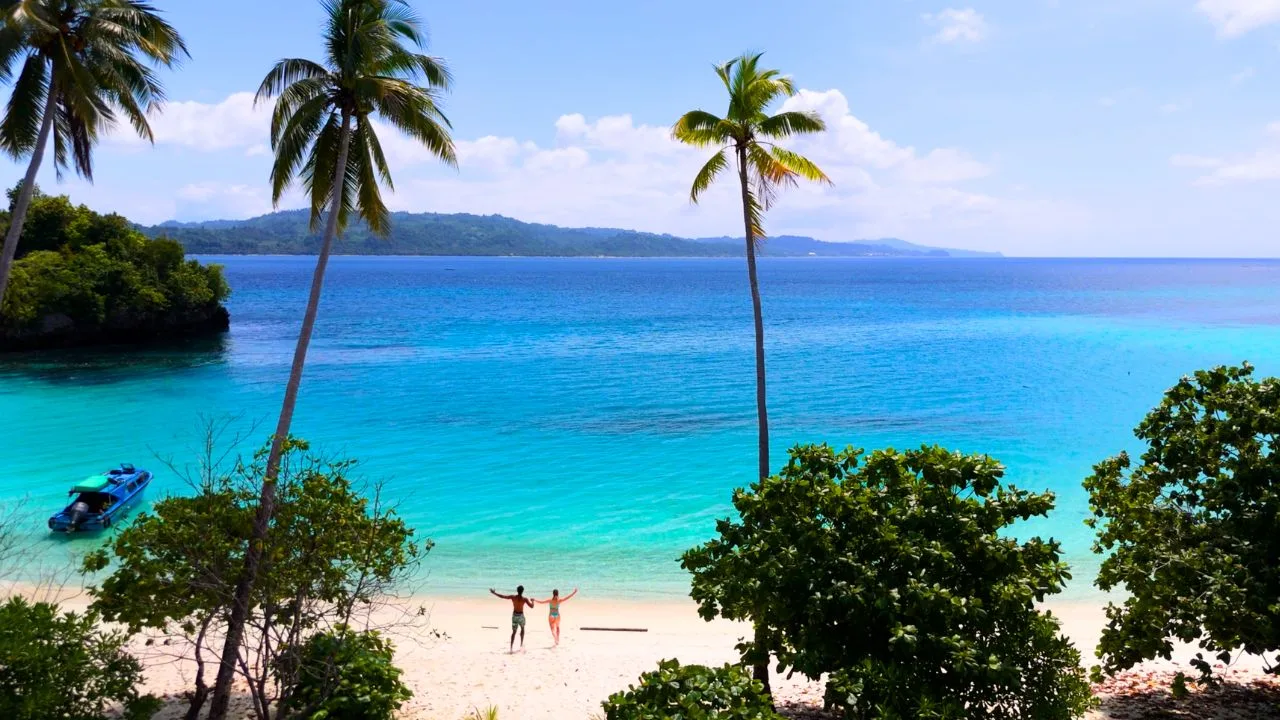
Our guide, Achu, bought some squid that had almost certainly been caught only minutes earlier.
It doesn’t get much fresher than that.
Looking back, that’s one of our favourite memories from the entire trip.
Not because of the squid itself, but because it perfectly captured how authentic this part of Indonesia still feels.
The only other person we saw all morning wasn’t another tourist.
It was a fisherman going about his day.
The Hidden “New Beach”
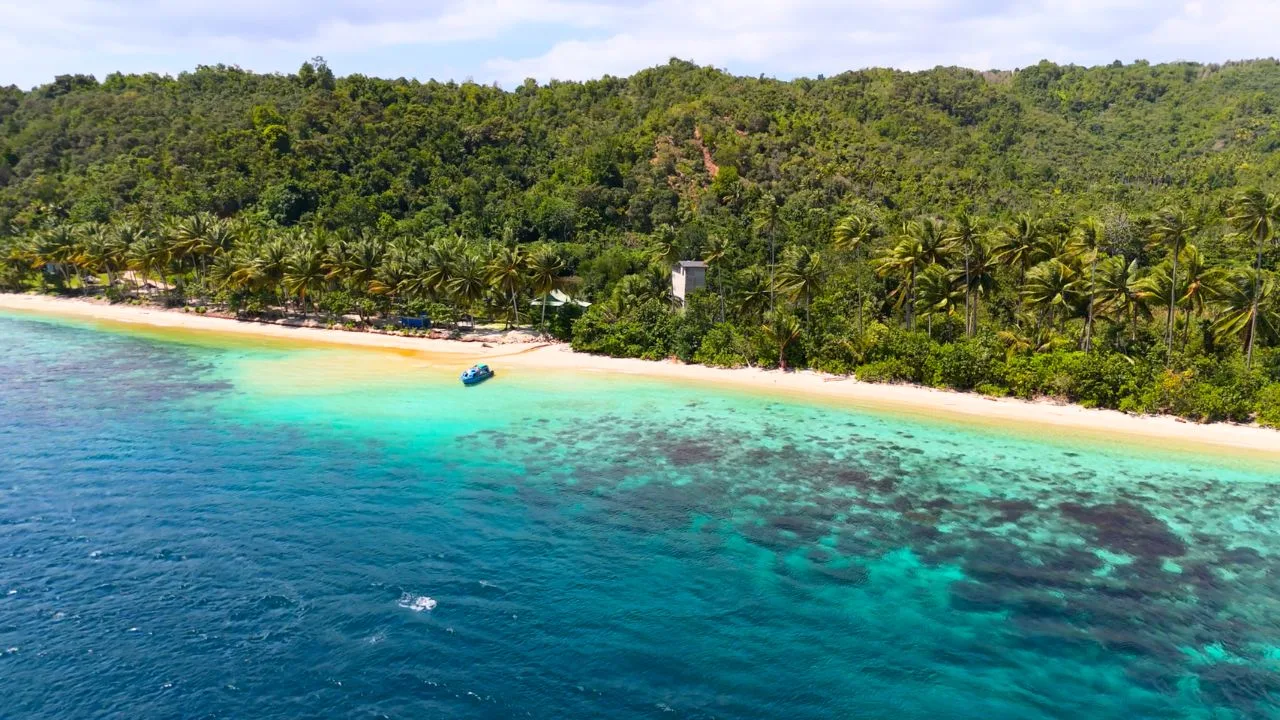
As incredible as Oyama Beach was… our next stop somehow felt even more special.
Our guide took us to a secluded stretch of coastline that everyone simply referred to as “New Beach.”
You won’t really find it marked on Google Maps, and even after searching ourselves afterwards, we struggled to identify an official name.
We’ll include the Google Maps pin below because it’s absolutely worth asking your boat captain about.
According to our guide, he actually discovered this beach after rough seas once prevented him from reaching Oyama Beach.
Whether it officially has a name or not almost doesn’t matter.
What matters is that it’s stunning.
The water was unbelievably clear, the sand was beautifully soft and once again… we had it completely to ourselves.
If you’re arranging a private boat around the Banggai Islands, we’d definitely recommend asking whether they can include this stop in your itinerary.
Because it isn’t one of the main tourist attractions, it can easily be missed.
Lunch At Kia Homestay
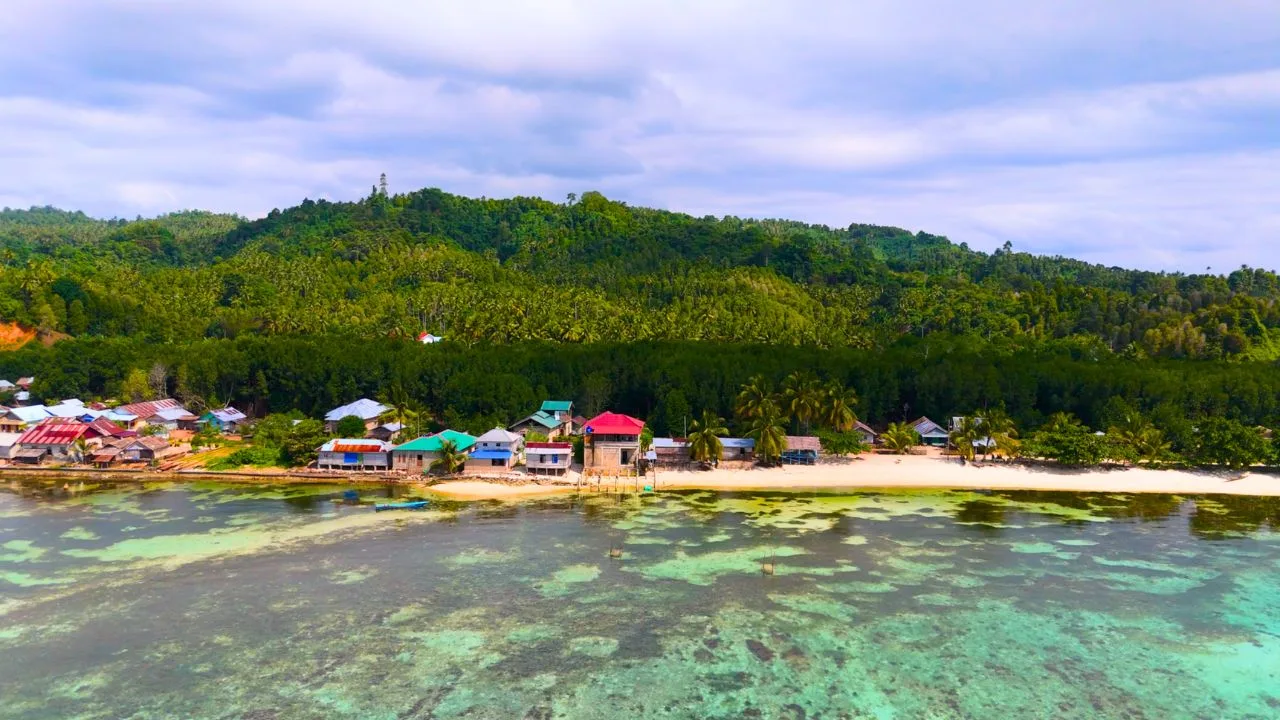
After a morning spent exploring hidden beaches, we’d definitely worked up an appetite.
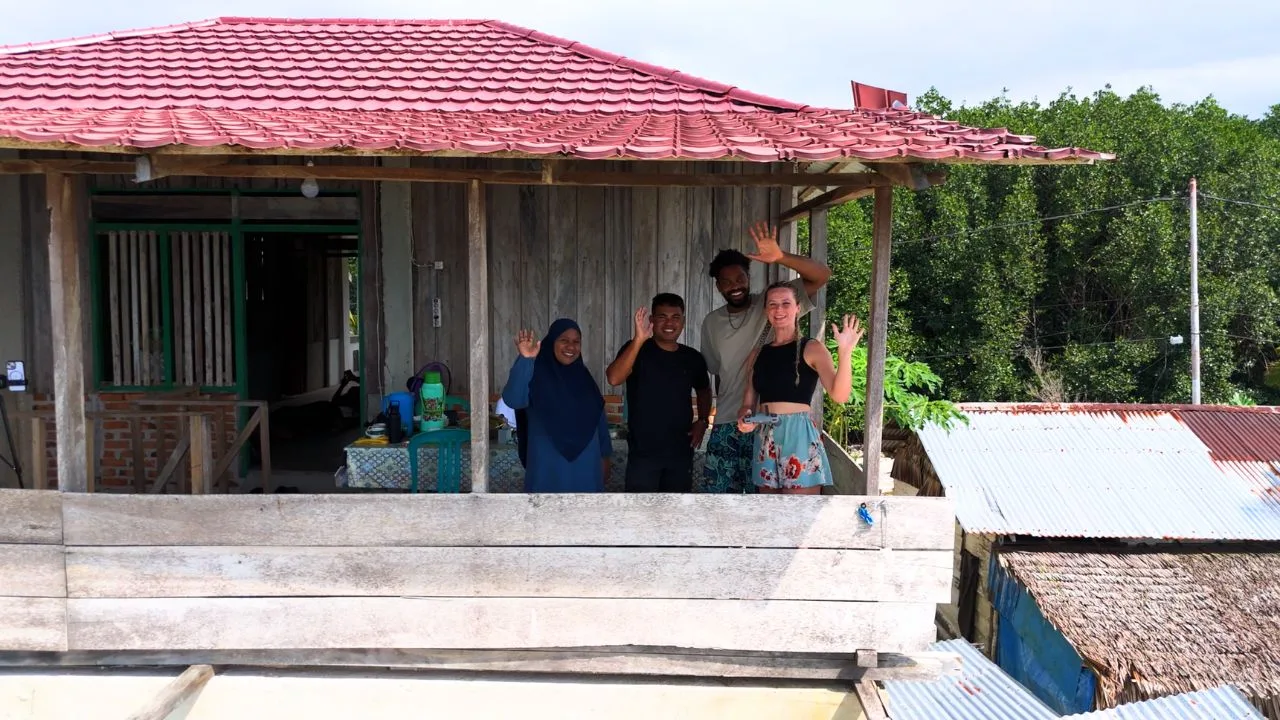
Our next stop was Kia Homestay, where we pulled our boat onto the shore and were immediately welcomed with huge smiles.
It was one of those places that instantly makes you feel at home.
The family who run Kia Homestay were incredibly kind and welcoming, and within minutes we were chatting away, meeting their children and, of course, saying hello to several very cute kittens that had made themselves completely at home around the property.
If you’ve watched our videos before, you’ll know we’re complete suckers for animals, so naturally they stole a fair bit of our attention!
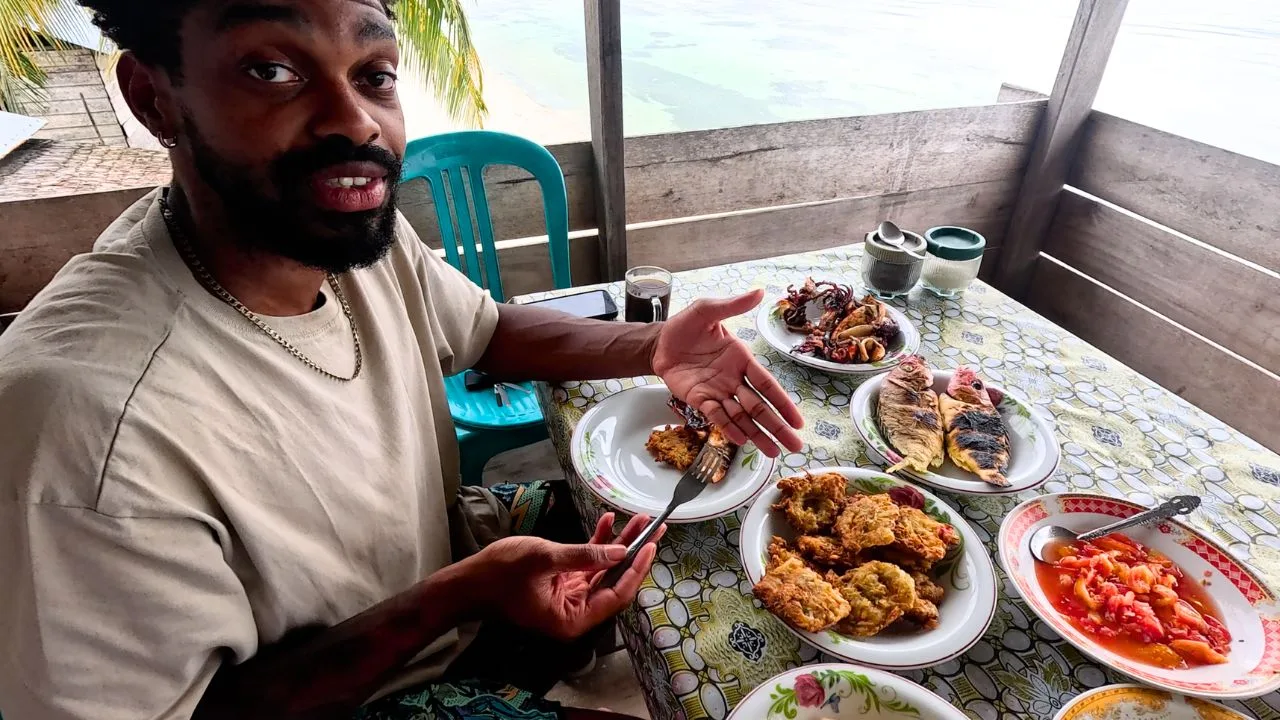
Lunch was absolutely delicious.
Freshly cooked local Indonesian dishes were served with a view of some of the bluest water we’ve ever seen. Sitting there after an incredible morning on the boat, surrounded by nothing but tropical islands and the sound of the sea, was epic!
If you’re planning your own trip, Kia Homestay is also somewhere you can stay overnight.
We only visited for lunch, but after meeting the family and seeing the location, we’d happily recommend considering it if you’d like to spend longer exploring this side of the Banggai Islands.
Before You Go: Tips We Wish We’d Known
Travelling around the Banggai Islands is very different from travelling around Bali, Lombok or even Java.
That’s exactly what makes it so rewarding.
But there are a few things we’d recommend knowing before you arrive.
Allow more time than you think you’ll need
This is probably our biggest piece of advice.
Flights can be delayed.
Ferries don’t always depart exactly on schedule.
Weather can change quickly.
Rather than planning every connection down to the minute, give yourself an extra day or two if you can.
It’ll make the whole trip far less stressful.
Embrace “island time”
Things move at a different pace here.
Instead of fighting it, embrace it.
Some of our favourite memories happened because plans changed.
Travelling with a little flexibility is all part of the experience.
The weather can be unpredictable
Unlike Bali, where there’s generally a more obvious dry and wet season, Central Sulawesi’s weather is much harder to predict.
Its location between Borneo, the Philippines and eastern Indonesia means conditions can change surprisingly quickly.
We were incredibly lucky with the weather during much of our visit, but rain showers can appear at almost any time of year.
If you’re planning boat trips, we’d recommend allowing a little flexibility rather than assuming every day will be perfect.
Bring cash
Many smaller businesses and local boat operators prefer cash payments.
ATMs become much less common once you leave the larger towns, so it’s worth withdrawing enough money before heading deeper into the islands.
Download offline maps
Mobile signal can be patchy in places.
Downloading Google Maps offline before setting off makes navigating much easier, especially if you’re visiting lesser-known beaches or travelling independently.
Where We Stayed
During this part of our Banggai Islands adventure, we based ourselves in Salakan.
This made a fantastic base for exploring the eastern side of Peleng Island and reaching many of the attractions around the Banggai Islands.
We found it to be clean, comfortable and excellent value, while also being conveniently located after arriving into Salakan port by ferry.
Accommodation choices in this part of Central Sulawesi are far more limited than destinations like Bali, so we’d recommend booking ahead where possible, particularly during Indonesian holiday periods.
One place we’d also recommend visiting while you’re in Salakan is Kopi Teman.
If you’re anything like us and enjoy starting (or ending!) the day with a good coffee, this became one of our favourite little spots in town.
Banggai Island Tour
The Banggai Islands are not the easiest to get to, but they are SO worth it! If you want to take the stress out of the planning, a guided tour can make this trip much easier. You can check out this great option below if you are interested.
Final Thoughts
Travelling to the Banggai Islands isn’t the easiest adventure we’ve ever had.
It takes time.
It takes patience.
It definitely takes a little flexibility.
But we’d do it all again in a heartbeat.
Some destinations impress you because they’re luxurious.
Others impress you because they’re famous.
The Banggai Islands impressed us because they felt genuinely untouched.
From sleeping alongside locals on the ferry, to being welcomed with smiles everywhere we went, to finding beaches where we didn’t see another tourist all day, this felt like the kind of Indonesia that’s becoming increasingly difficult to find.
If you’re willing to venture a little further off the beaten path, you’ll be rewarded with some of the most beautiful landscapes we’ve ever seen, unforgettable local hospitality and an adventure you’ll probably still be talking about years later.
For us, this was only the beginning.
And somehow, the Banggai Islands only got better from here.
Big Love
Beth and Denz
Related Experiences
Here are some of our other adventures from our time exploring the Banggai Islands and Central Sulawesi. There are so many amazing things to do, so feel free to check them out!