


A 1am wake-up, torrential rain, a hike into an active volcano and a blue flame burning at 300°C. We thought this adventure was doomed before it had even begun but thankfully, we were wrong.
Watch Our Full Experience At Mount Ijen
Why We Wanted To Visit Mount Ijen
By the time we arrived in East Java, we had already heard about Ijen Volcano from countless locals, guides and fellow travellers.
Everyone kept telling us the same thing: “You have to see the blue flame.”
The more people recommended it, the higher it climbed on our East Java bucket list.
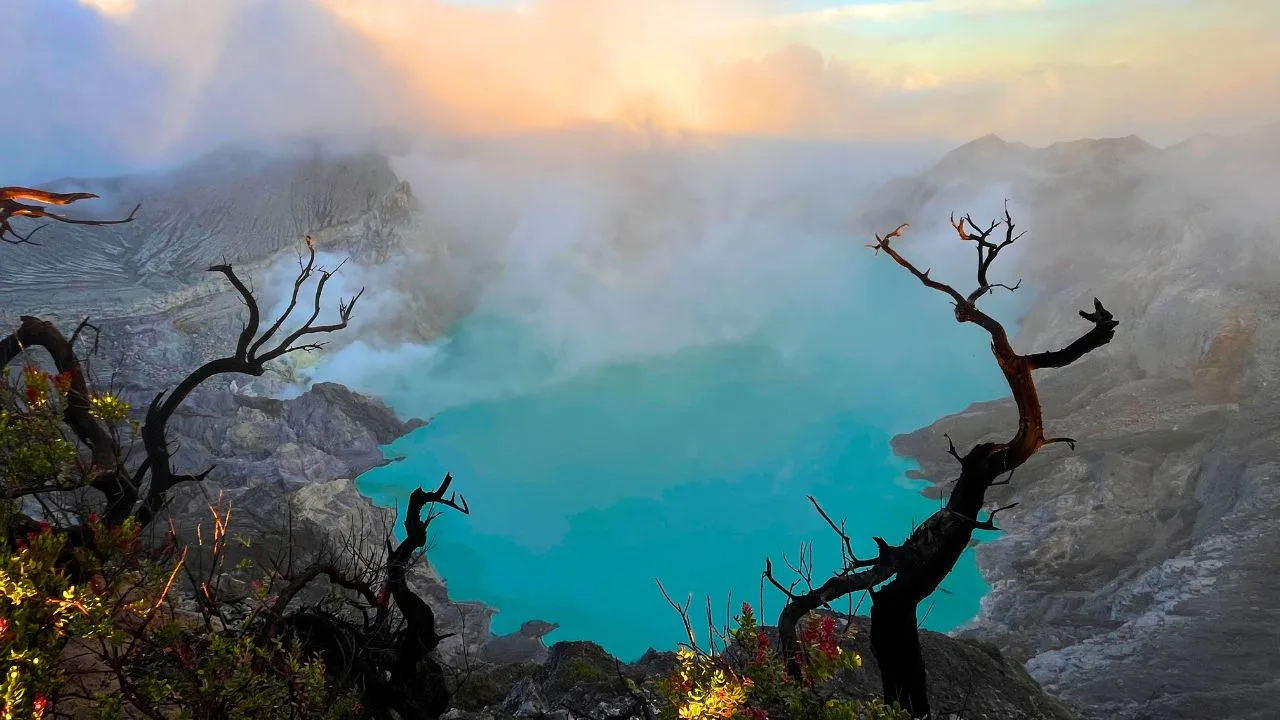
What makes Ijen so special is that the famous blue fire is one of the rarest natural events in the world. Combined with the huge acidic crater lake and dramatic volcanic landscape, it has become one of Indonesia’s most iconic adventures.
So when the opportunity finally came to visit, we couldn’t wait to see whether it really lived up to the hype.
Starting The Hike In Torrential Rain
Unfortunately, Mother Nature had other ideas.
Our alarm went off shortly after midnight, and we began the drive towards Ijen Volcano in complete darkness.
The higher we climbed, the worse the weather became.
Dense fog shrouded the road, and heavy rain pelted the windows. We could barely see ahead of us at times, and really, we started wondering whether Two Frequent Flyers had side quested a little too hard.
When we arrived at the trailhead around 1am, it was still raining heavily.
Thankfully, there were a few small stalls open where we grabbed our beloved Good Day Cappuccino and picked up some emergency waterproofs. If you’ve watched our videos before, you’ll know that Good Day coffee has become something of a travel essential for us in Indonesia.
Our tour included a local guide, head torches and gas masks, all of which would prove very useful later.
Armed with caffeine, waterproofs and questionable confidence, we started hiking into the darkness.
Passing Through The Clouds
The first section of the hike is a steady uphill climb through the forest.
Initially, all we could hear was rain hitting our waterproofs and the footsteps of other hikers making their way towards the crater.
But then the rain gradually became lighter.
Then lighter again.
And eventually it stopped completely.
As we continued climbing, we suddenly noticed stars appearing above us.
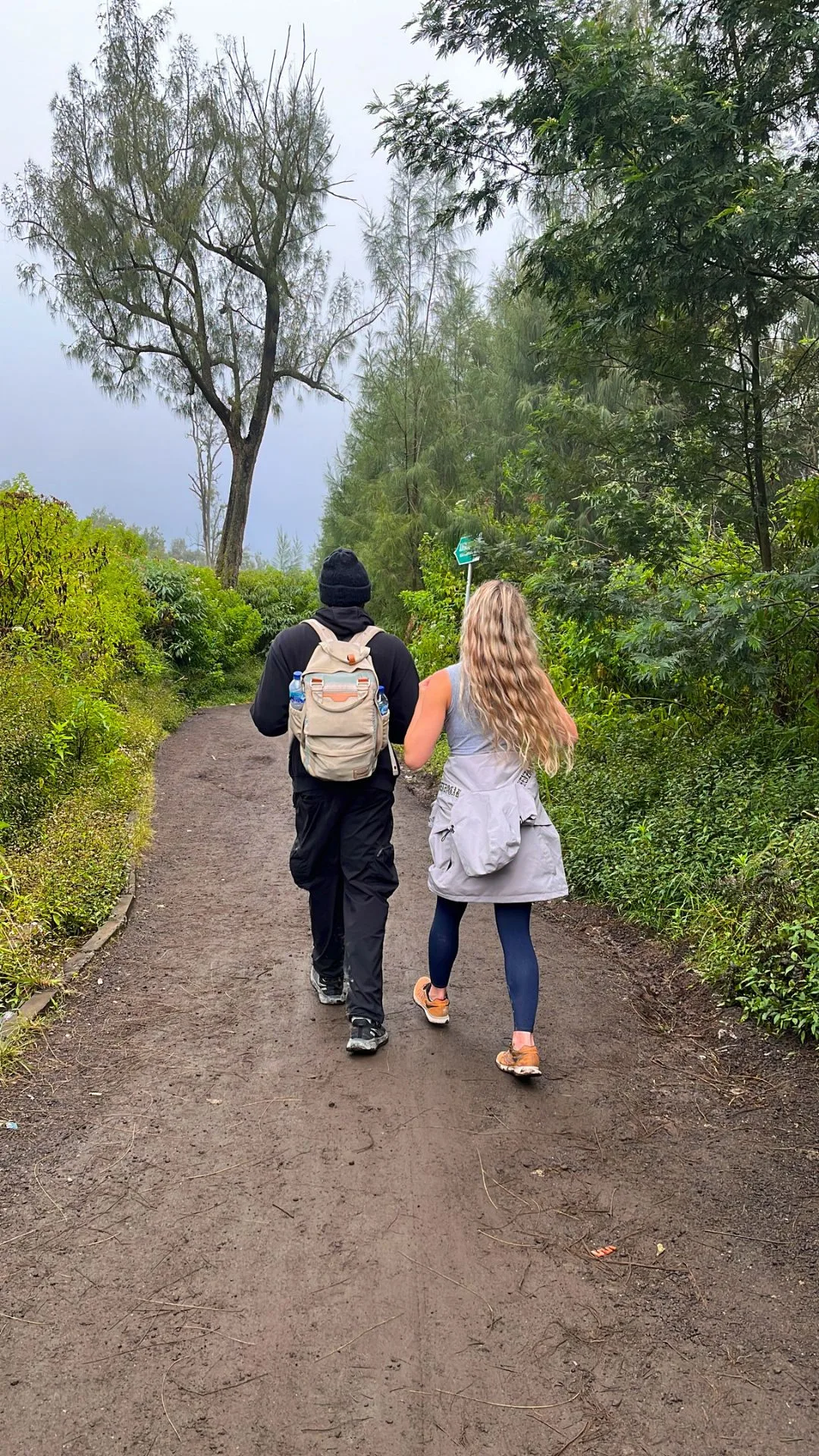
By the time we reached the upper sections of the volcano, we had completely broken through the cloud layer. Above us was a clear sky filled with stars and a bright moon.
After the miserable start, our spirits instantly lifted.
We spent the climb joking with our guide, practising our Indonesian and chatting with other hikers making the same journey.
Are You Keeping Up With Our Indonesia Series?
Check out our full collection of Indonesia Experiences
Descending Into Mount Ijen’s Crater
Reaching the top isn’t actually the end of the hike.
To see the famous blue flame, you then have to descend deep into the crater itself.
This section is much steeper than the initial climb and is completed in almost complete darkness using your head torch.
The path is rocky, uneven and requires a reasonable level of fitness. You definitely need to watch your footing.
Along the way, we passed countless sulphur miners carrying enormous baskets of sulphur up the mountain.
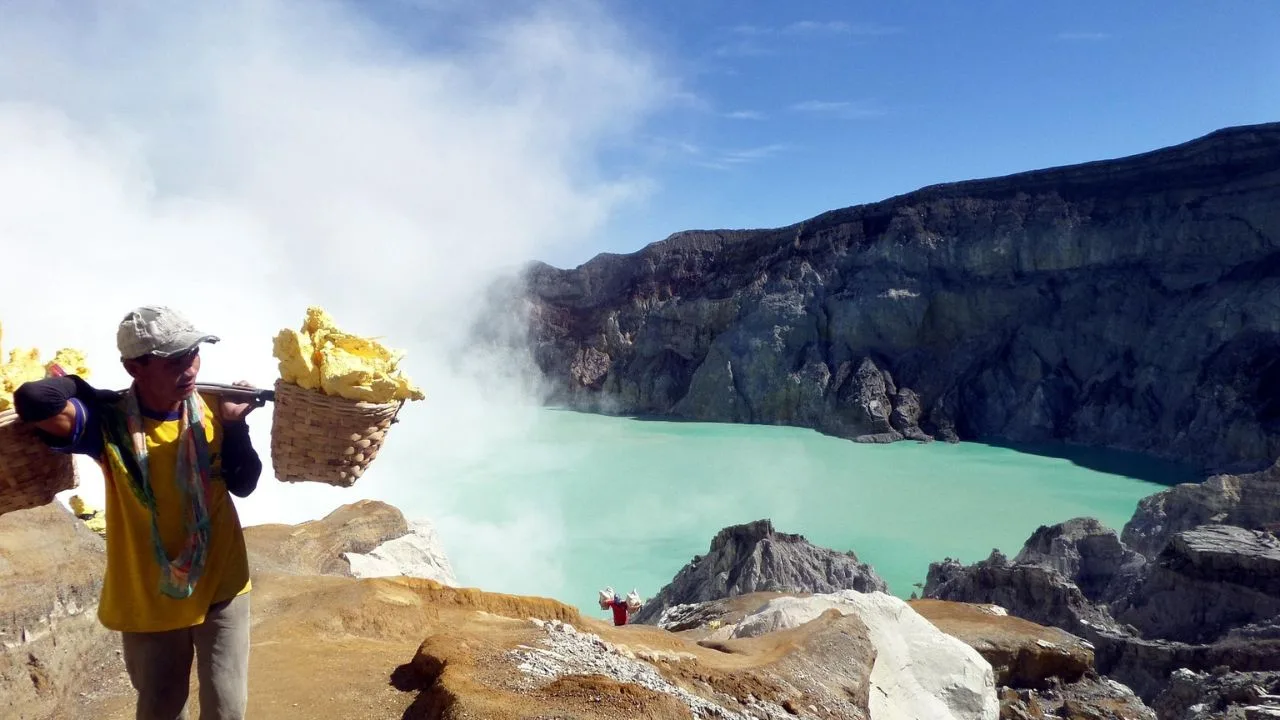
The amount of weight these locals carry is genuinely unbelievable.
Watching them pass through the steep volcanic terrain while carrying loads that looked heavier than us made our own hike feel very easy by comparison.
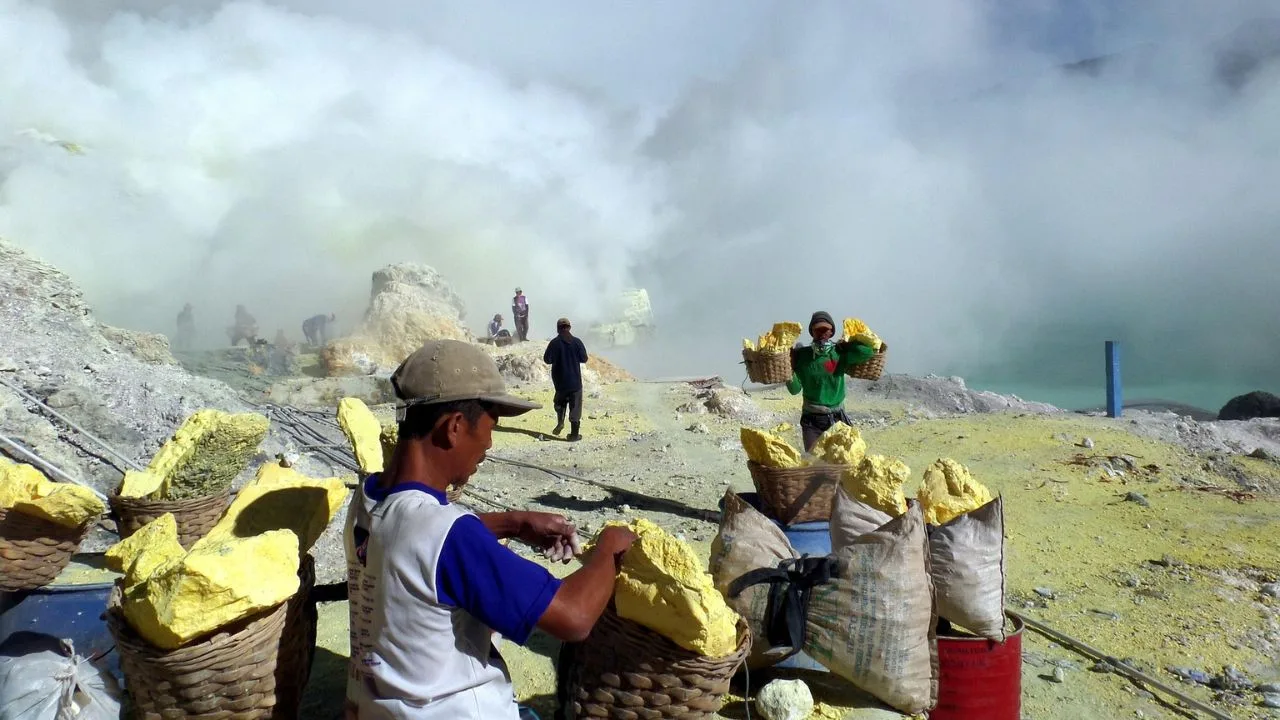
There have been past incidents of sudden water surges, which is why guides now play such an important role in keeping visitors safe.
Our guide Denny was constantly monitoring conditions and helping us navigate the route safely.

Pin It On Pinterest
Mount Ijen’s Blue Flame
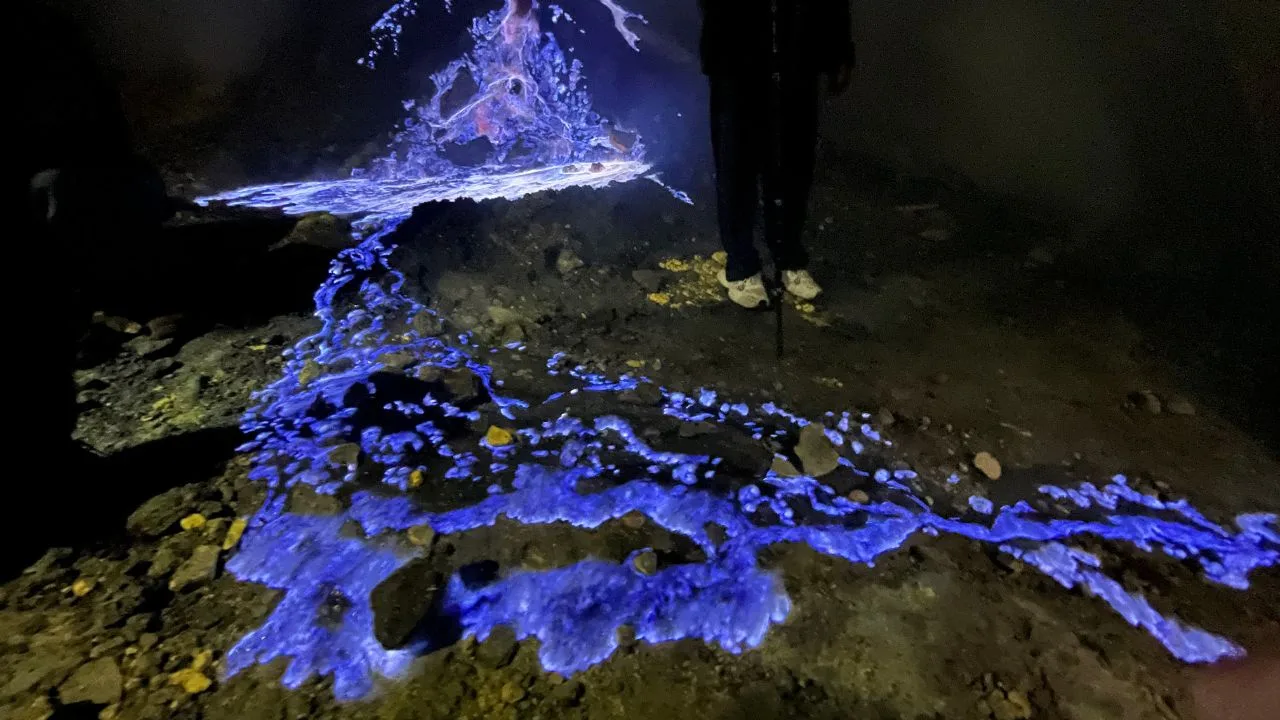
Eventually, we reached the bottom of the crater.
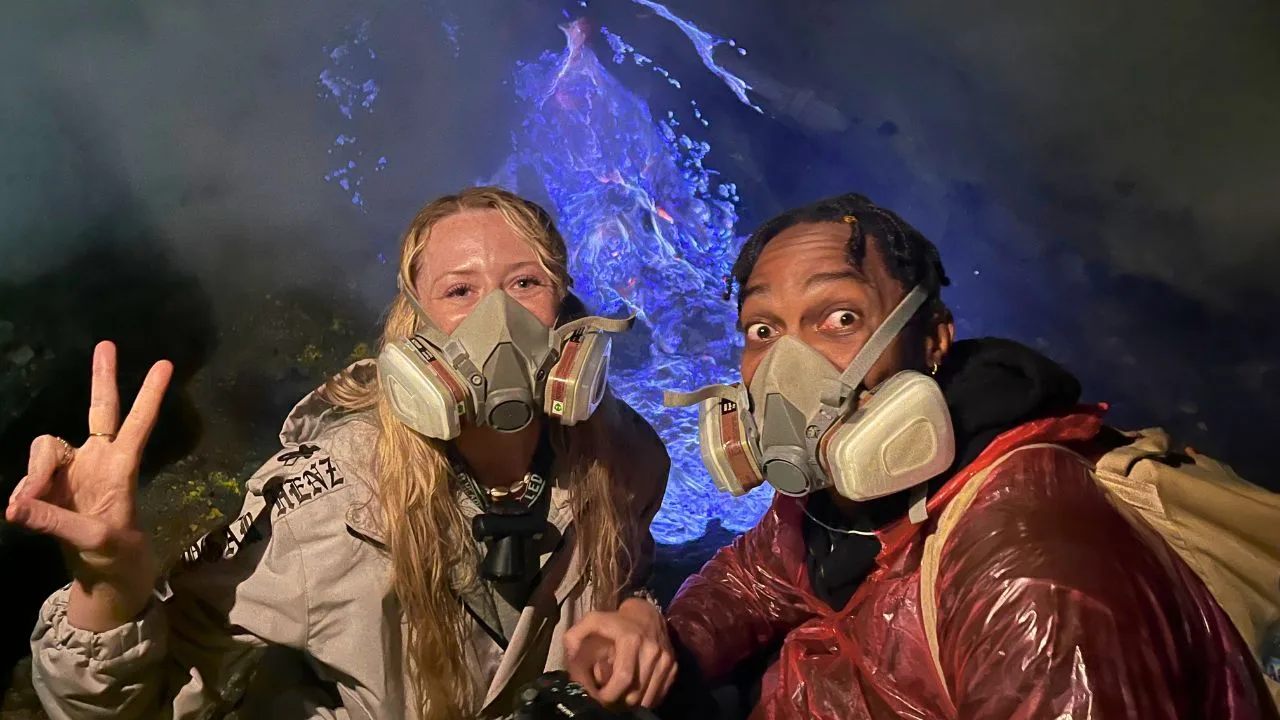
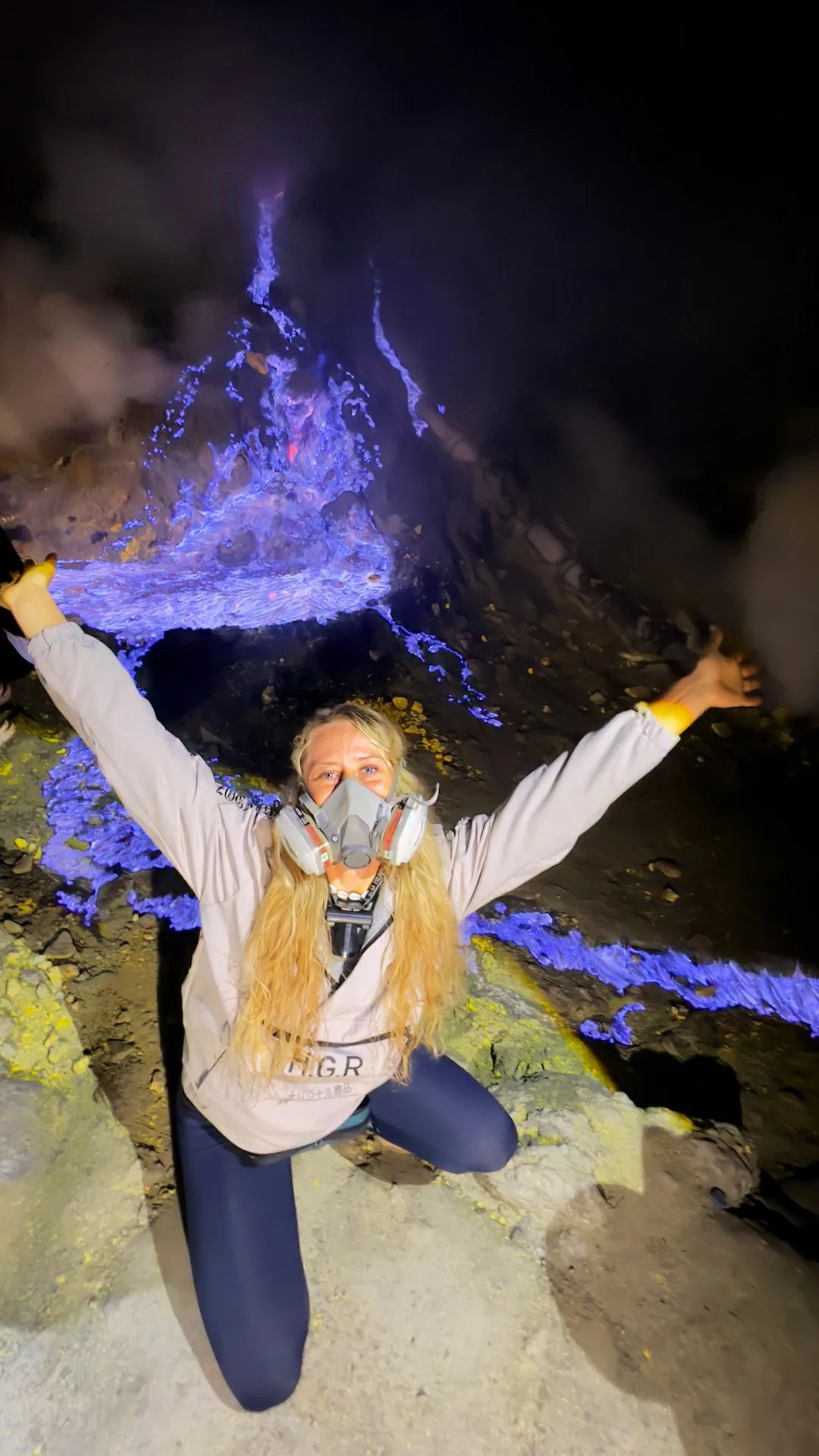
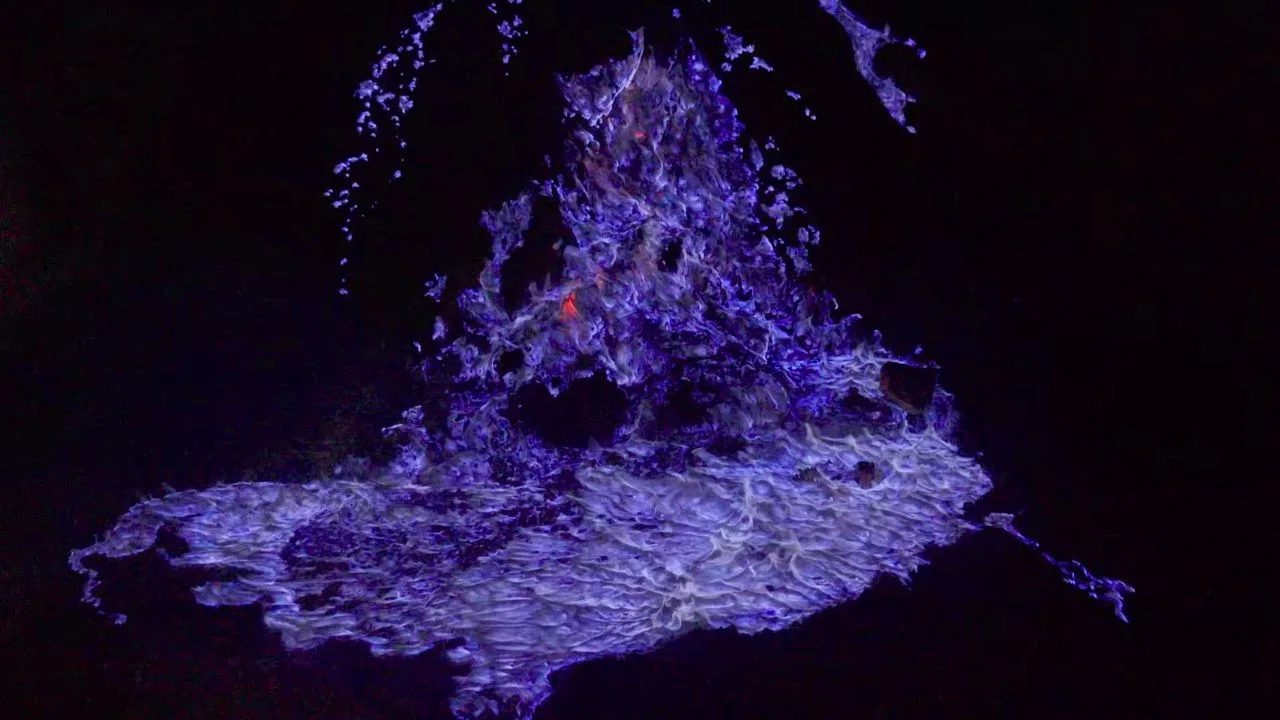
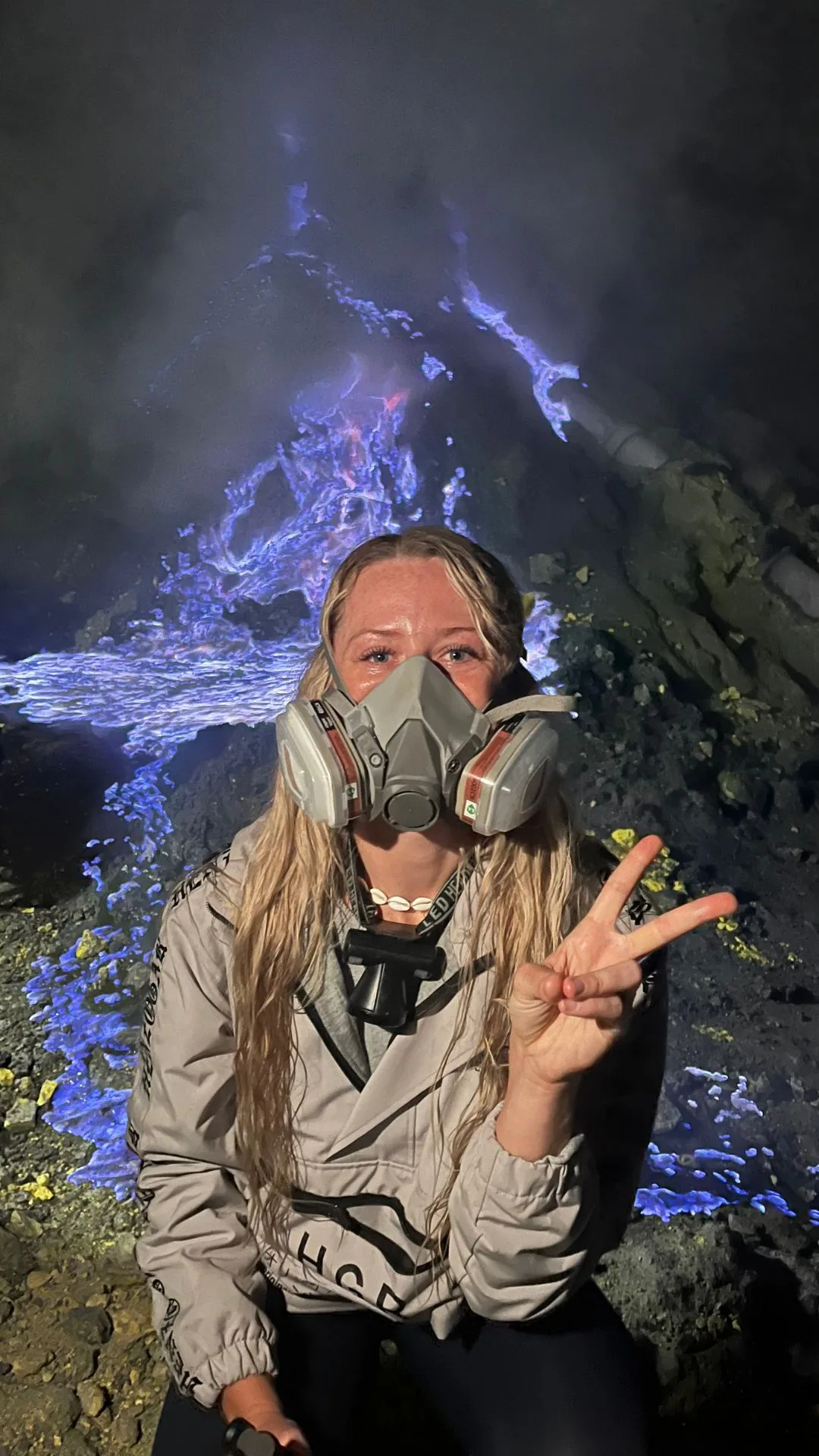
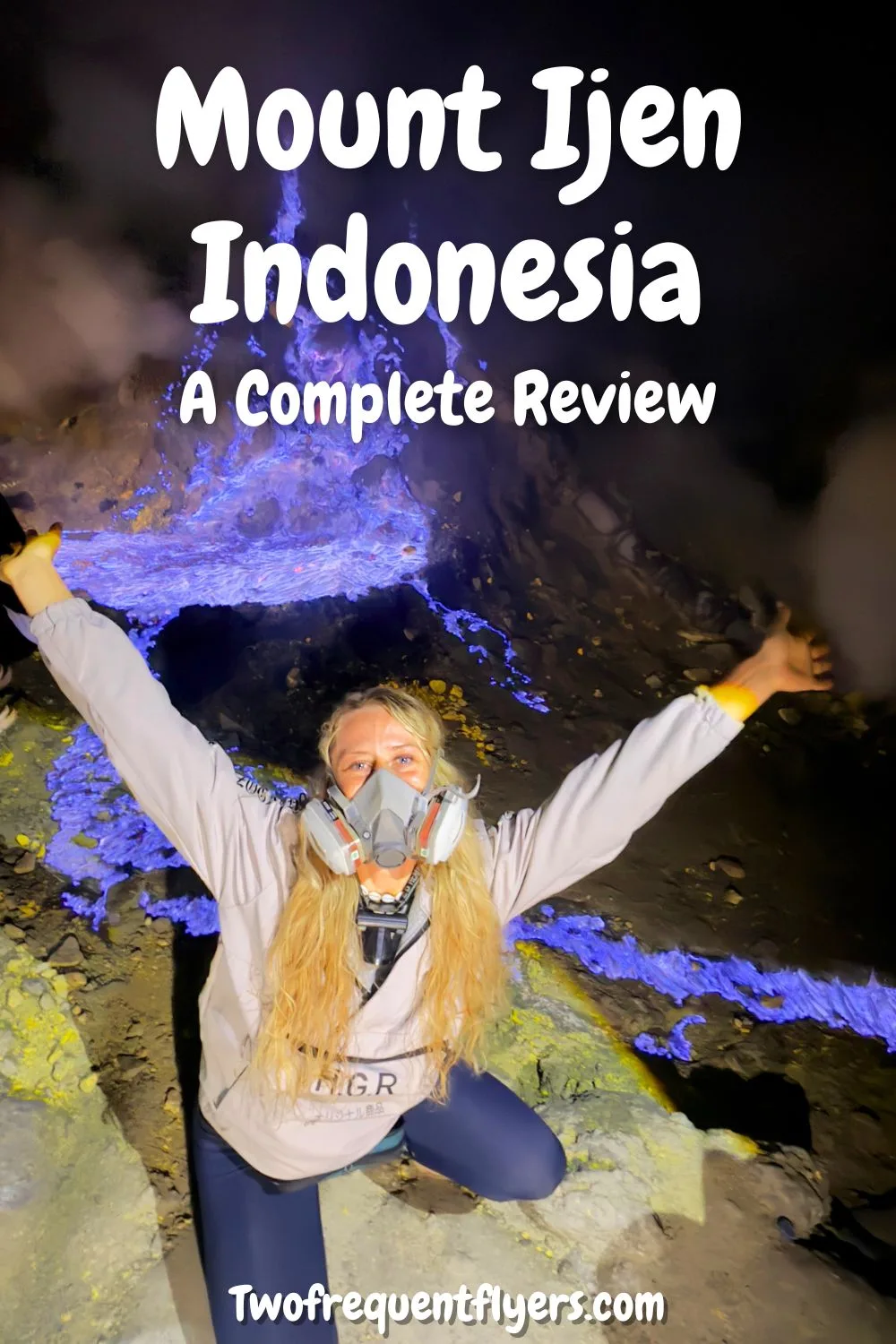
And that’s when we saw the famous blue flame.
Even after seeing many photos online, nothing prepared us for how unreal it looked in real life.
We were incredibly lucky with timing because the flame was absolutely massive on the day we visited.
One thing many people don’t realise is that the size of the blue fire varies naturally. Some days it’s much smaller. On our visit, it was enormous.
What surprised us most was that the flame wasn’t only coming out of the rock face.
It was actually flowing across the ground like a glowing blue river.
The blue fire itself can reach temperatures of around 300°C, and because the area becomes extremely crowded, we saw people getting far too close while trying to take photographs.
As incredible as it is, no photo is worth losing a toe over.
So one top tip would be to take your time, be mindful of your surroundings and listen carefully to your guide.
Why The Gas Masks Matter
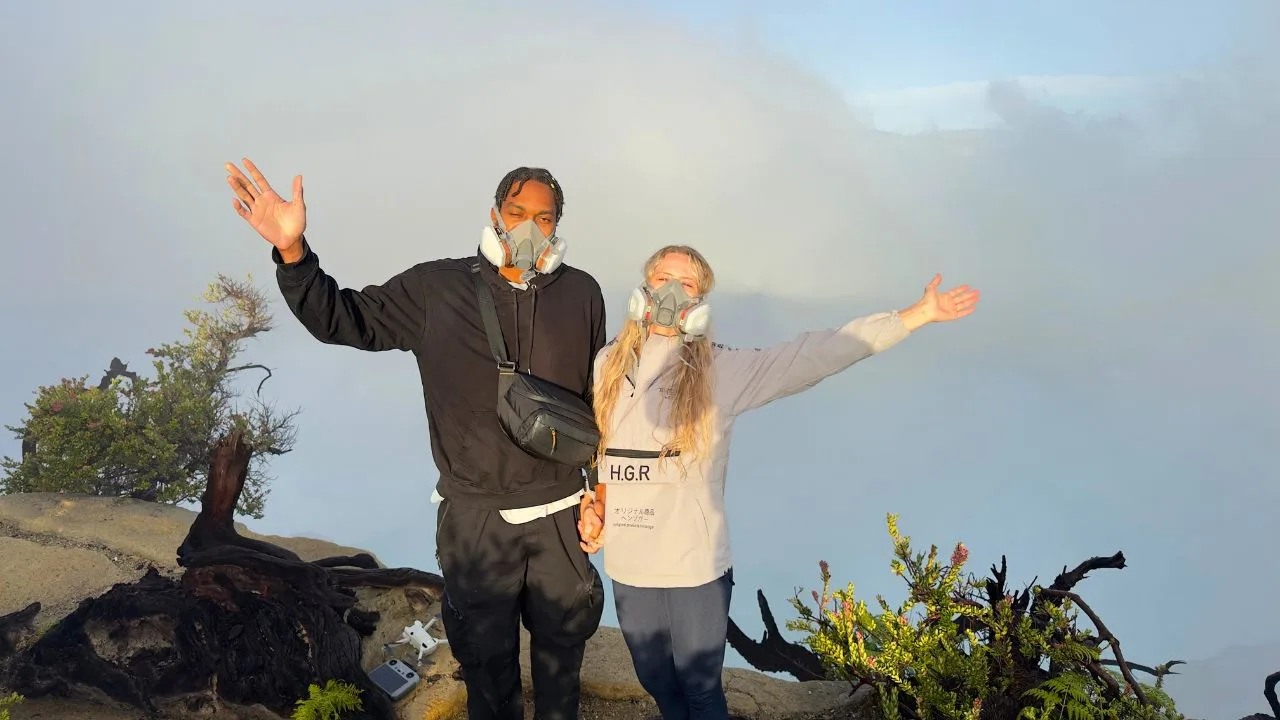
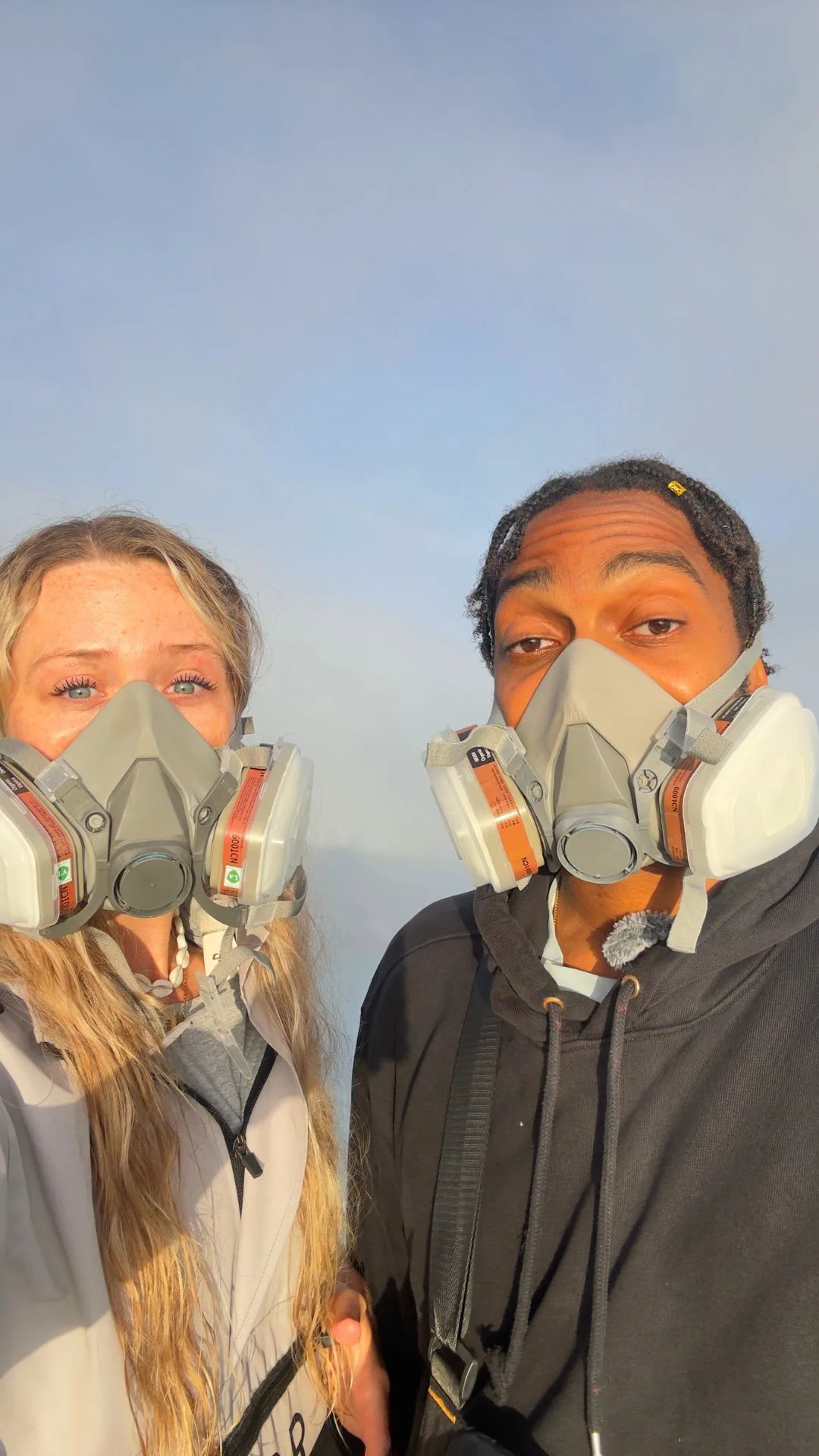
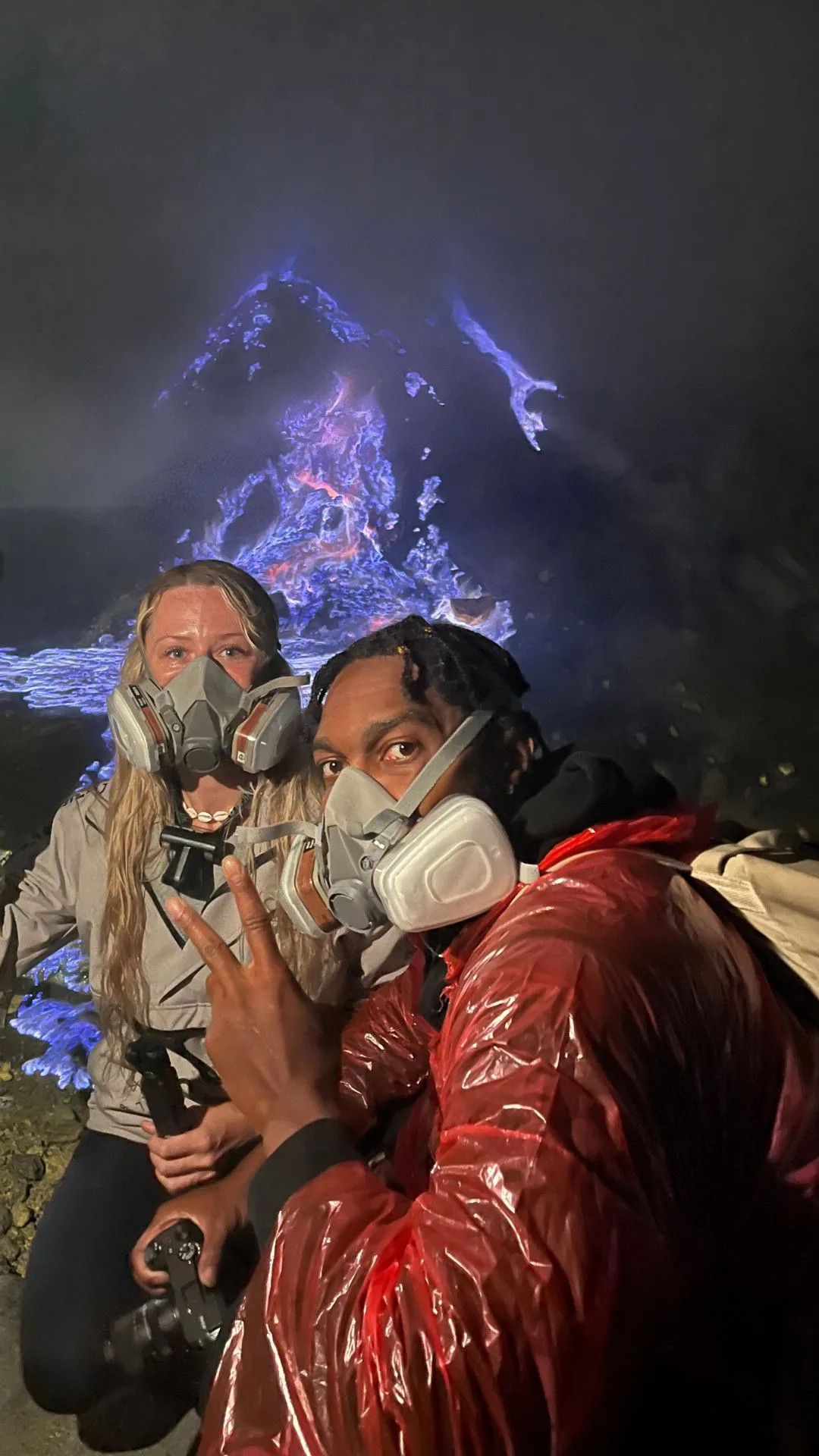
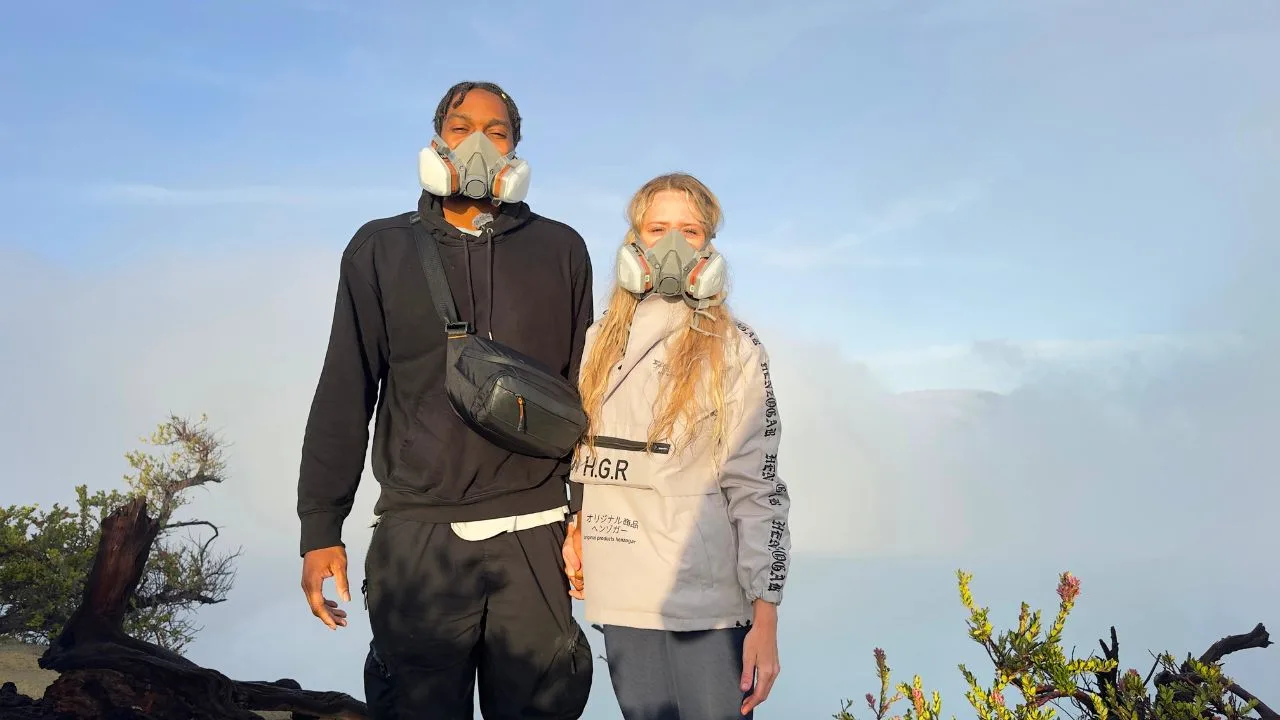
Another thing we cannot stress enough is to keep your gas mask on!
The blue flame is created when sulphur gases escape from the volcano and ignite when they come into contact with oxygen.
Those gases can be harmful if inhaled in high concentrations and can cause severe irritation to your eyes, nose and lungs.
The smell is also incredibly strong.
If you’ve never smelled sulphur before, imagine a very powerful egg smell.
Between the sulphur smoke, the crowds and the volcanic gases, the masks are absolutely essential.
Some visitors were removing theirs for photographs, but we would strongly recommend keeping yours on whenever your guide advises you to wear it.
Trust the people who work here every day.
Pin It On Pinterest
Climbing Back To The Crater Rim
After spending time admiring the blue flame, we had to make the climb back up to the crater rim.
What we hadn’t fully appreciated was just how busy Ijen Volcano becomes.
When we first descended into the crater, there were only a handful of people around us. By the time we started climbing back up, hundreds of hikers were making their way down towards the blue flame.
The narrow rocky path had effectively turned into a two-way road.
People were constantly moving up and down, head torches lighting the darkness in every direction.
Thankfully, the local guides were brilliant. They knew exactly where to stop, where to step aside and how to keep everyone moving safely.
It was definitely the most physically demanding section of the entire experience, but it was also an example of just how popular Ijen has become.
Honestly, once you’ve seen the blue flame for yourself, it’s easy to understand why.
Our Top Mount Ijen Tours
The Moment We Thought We’d Miss Everything
When we finally reached the crater rim again, we expected to be rewarded with incredible views.
Instead, we couldn’t see a thing. The fog was absolutely relentless.
Not just a little bit of cloud. Complete whiteout conditions.
After all the effort of hiking through the night, surviving the rain and making it down to the blue flame, we genuinely thought we were going to miss the famous crater lake entirely.
So we waited. And waited. And waited some more.
For over an hour, we slowly walked around the crater rim, occasionally stopping to stare hopefully into the fog.
Nothing. The visibility remained terrible.
At that point, we had almost accepted defeat.
Our Travel Insurance ❤️🩹
We use Safety Wing! The perfect travel insurance for adventure travellers! You pay a monthly subscription, which you can pause when you go back home, AND you can take out the insurance while you are already abroad!! Which is SUCH an awesome feature!
Then Everything Changed
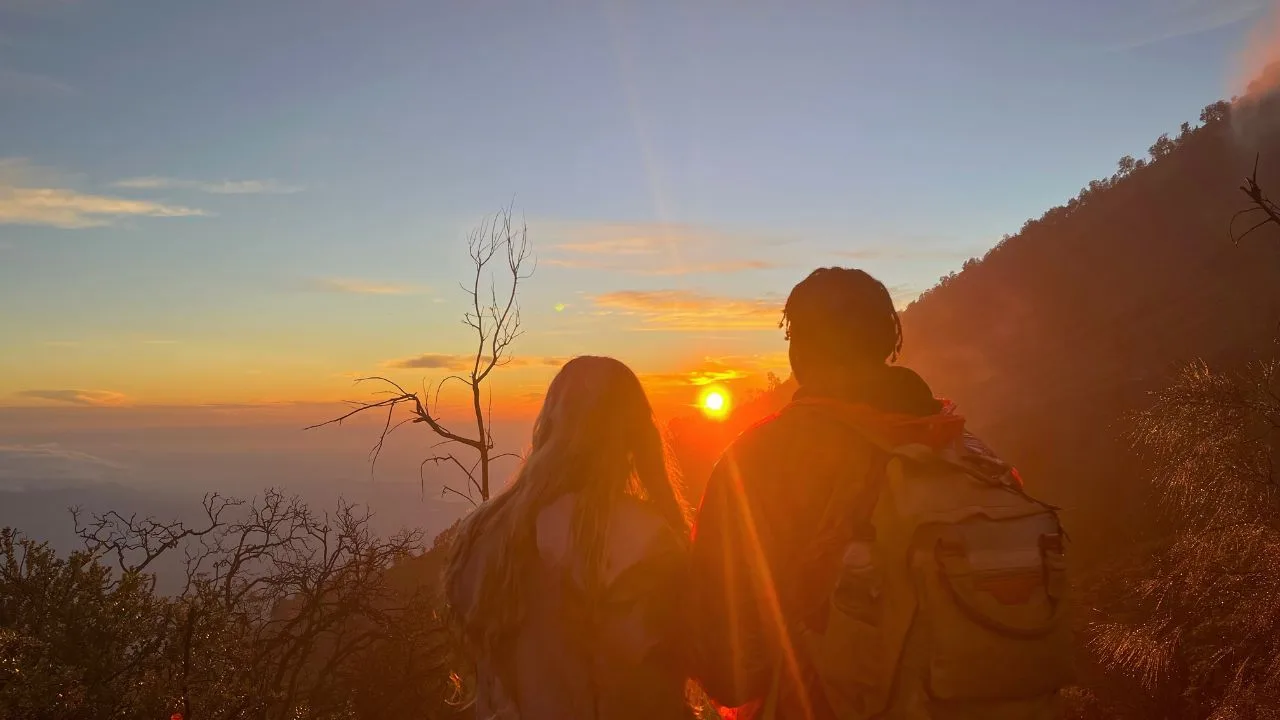
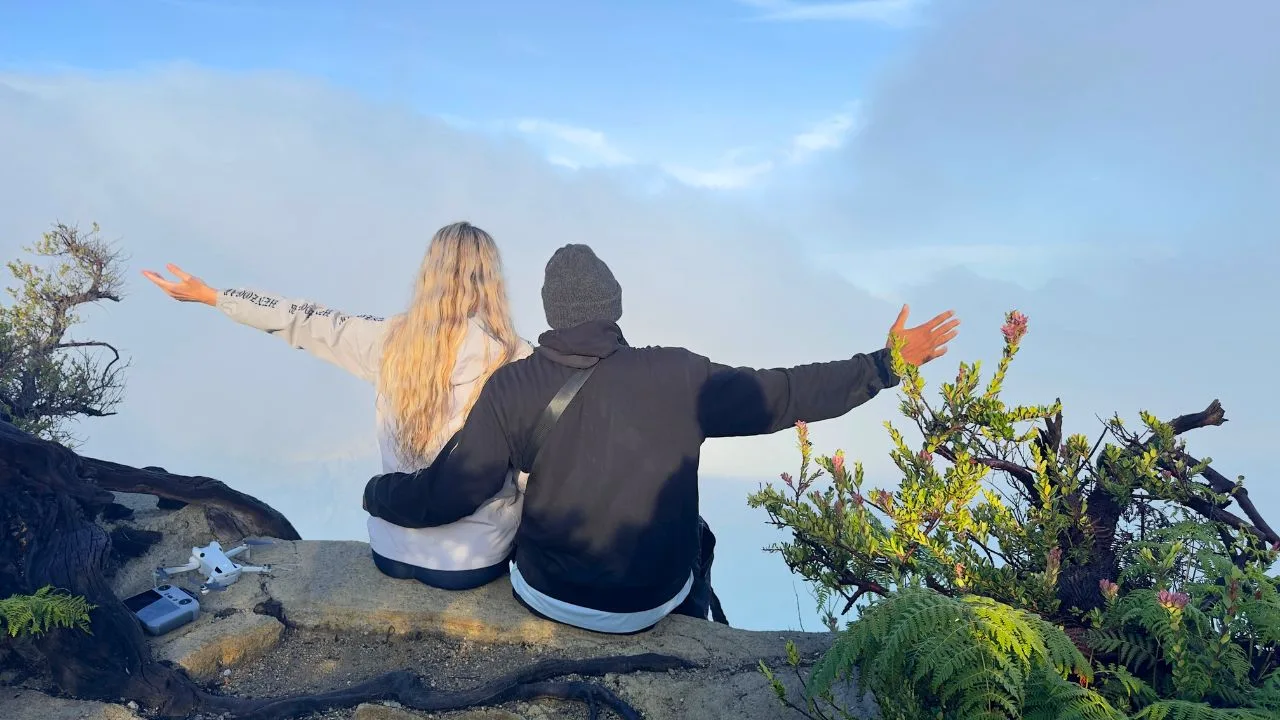
And then, completely out of nowhere, the clouds started to move.
At first, it was just a small gap. Then suddenly, the entire crater started to reveal itself.
We couldn’t believe what we were seeing.
One minute, there was nothing but fog.
Next, we were staring into one of the most spectacular landscapes we have ever witnessed.
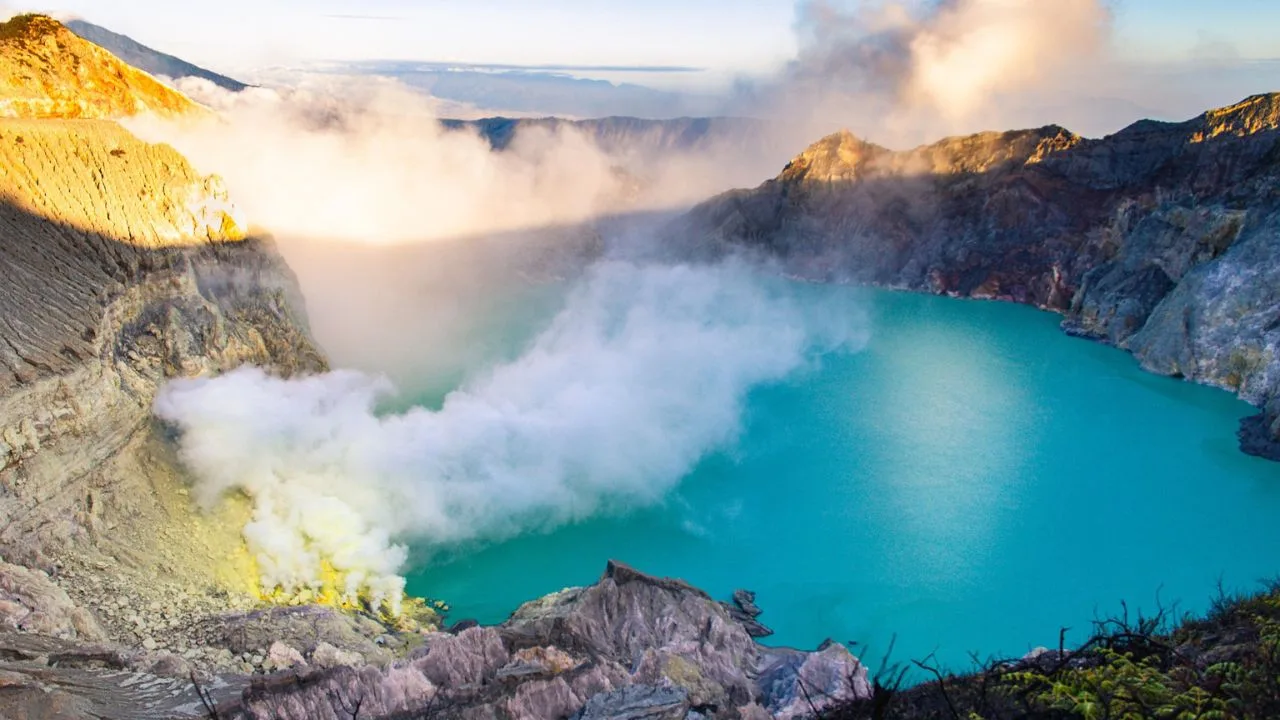
The timing couldn’t have been more perfect.
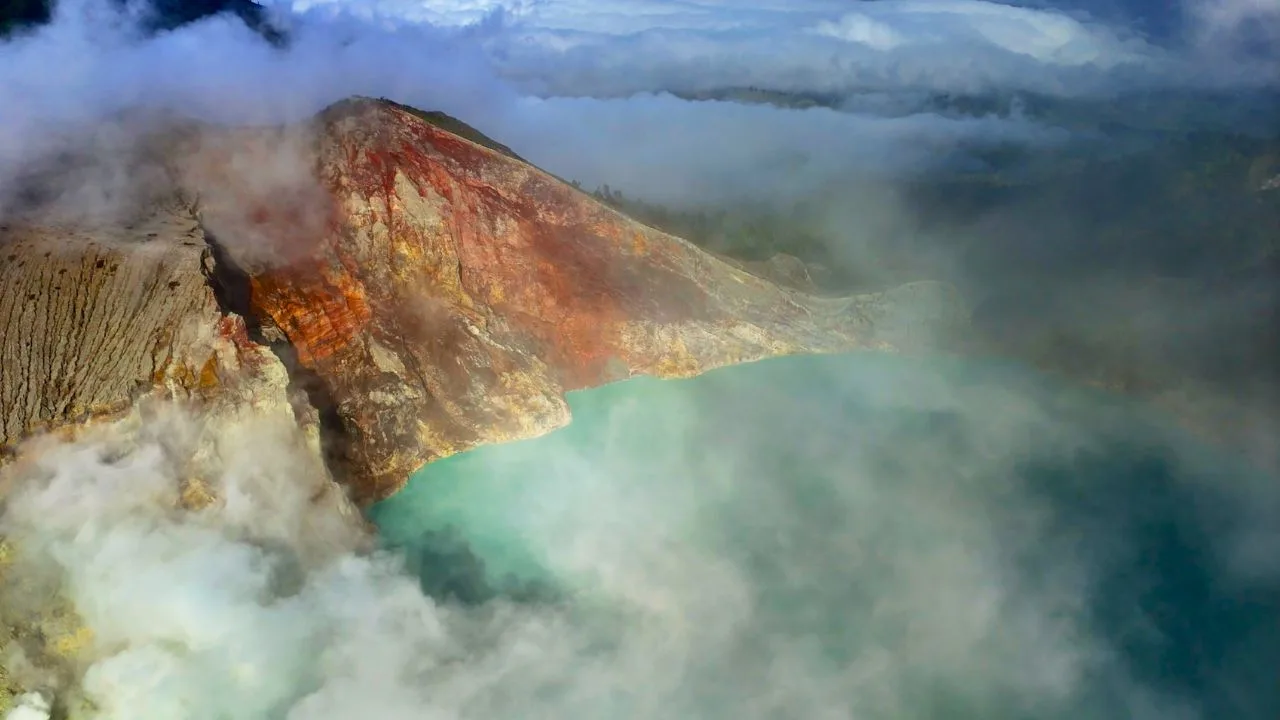
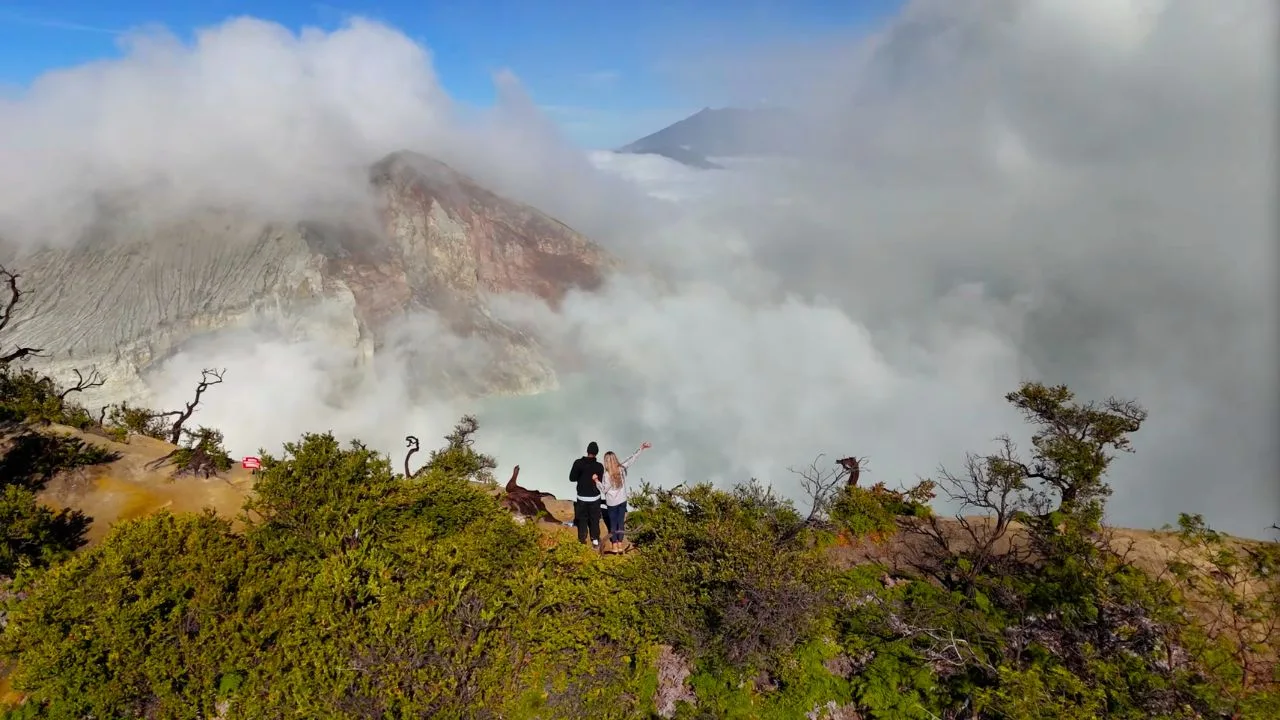
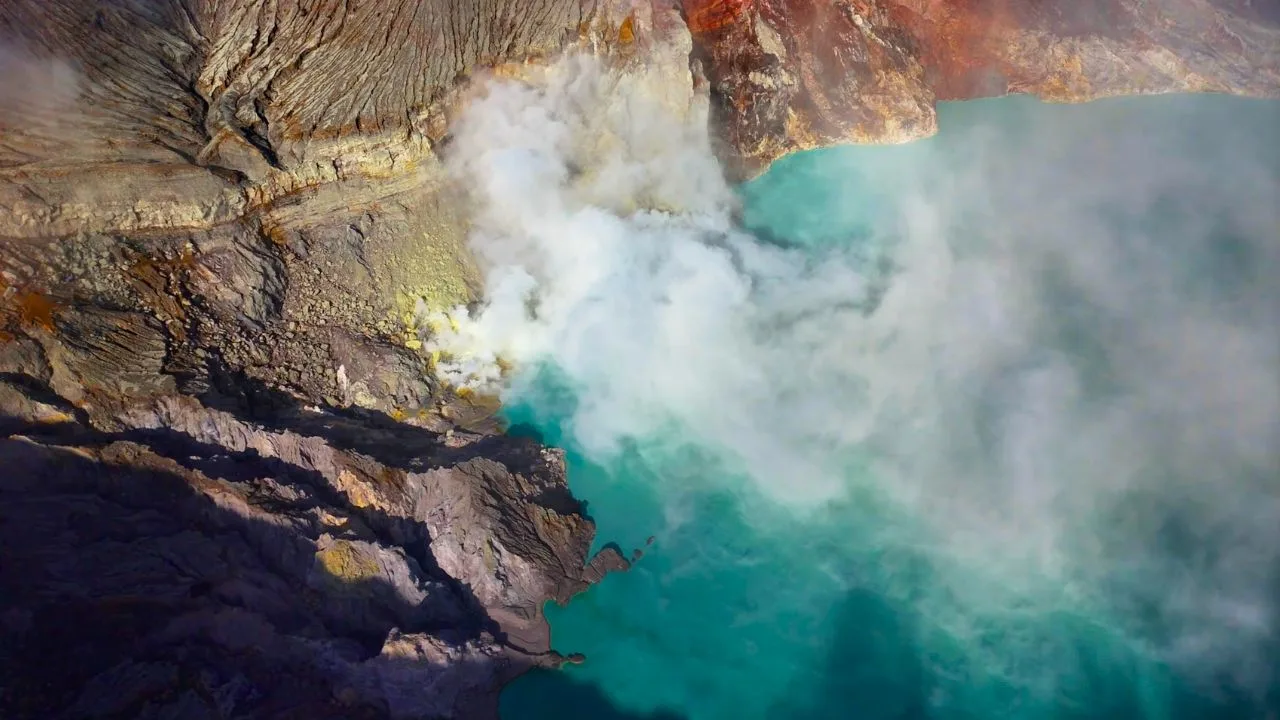
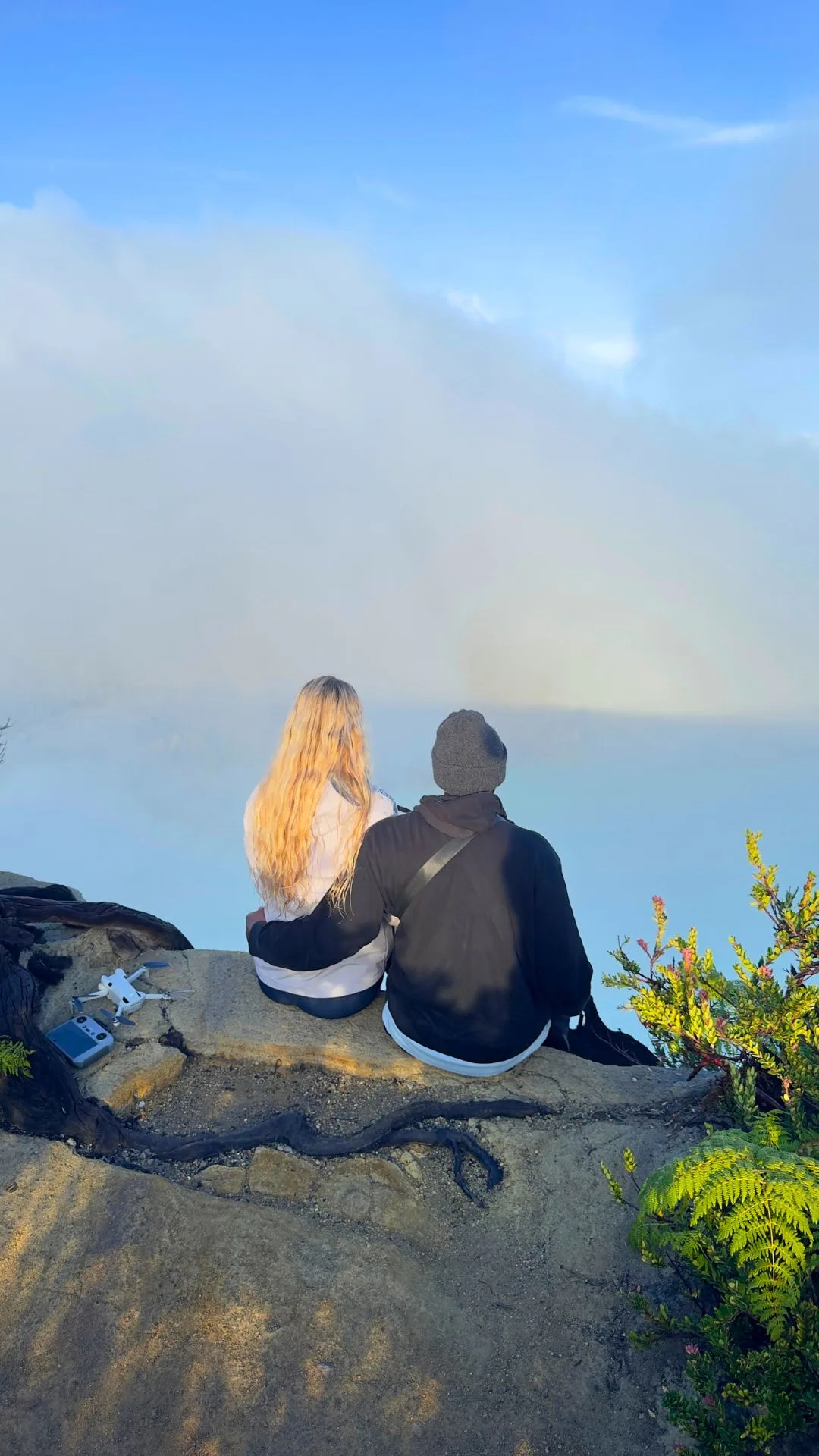
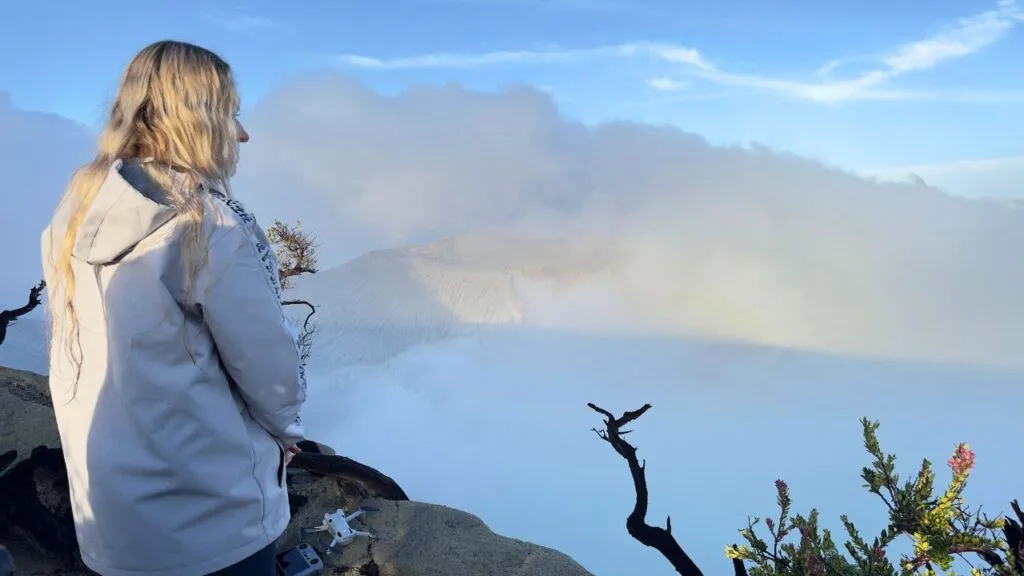
As the clouds cleared, the sunrise began shining on Mount Ijen’s crater and revealing the famous turquoise lake below.
It felt like Mother Nature had rewarded us for sticking it out.
There was even a rainbow!
Seeing The Crater Lake For The First Time
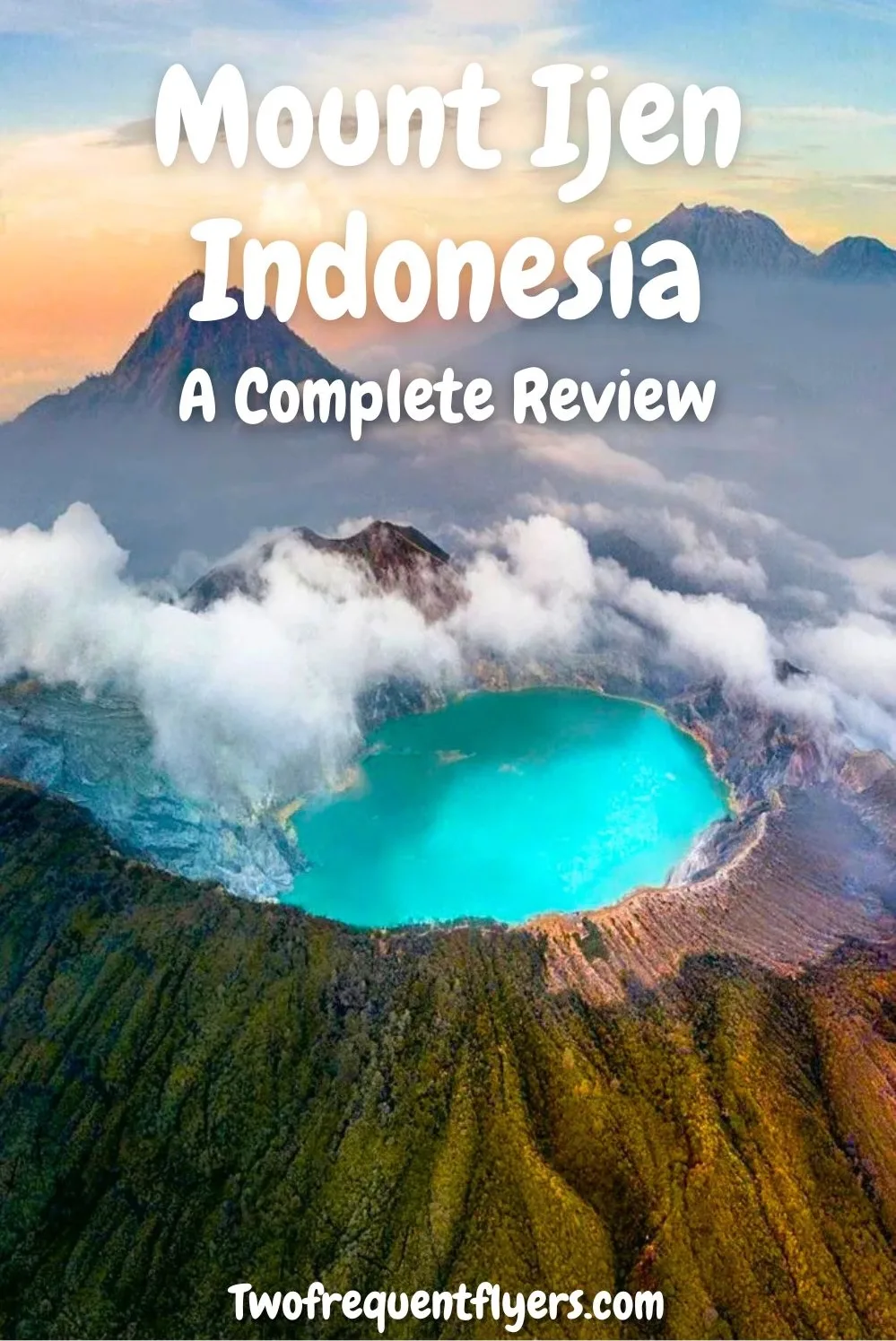
The crater lake at Ijen is one of those places that photographs simply cannot do justice.
The water is an almost unreal shade of turquoise blue.
Steam rises from the volcanic vents below. Sulphur smoke drifts across the crater.
And beyond it all, the surrounding mountains stretch into the distance.
It felt like another planet.
After spending so long staring into thick fog, the view somehow felt even more special.
The window of clear weather only lasted around 10 to 15 minutes before the clouds started rolling back in.
But those 10 minutes were enough.
Enough to remind us why people travel from all over the world to experience Mount Ijen.
The Slipperiest Walk Down Of Our Lives
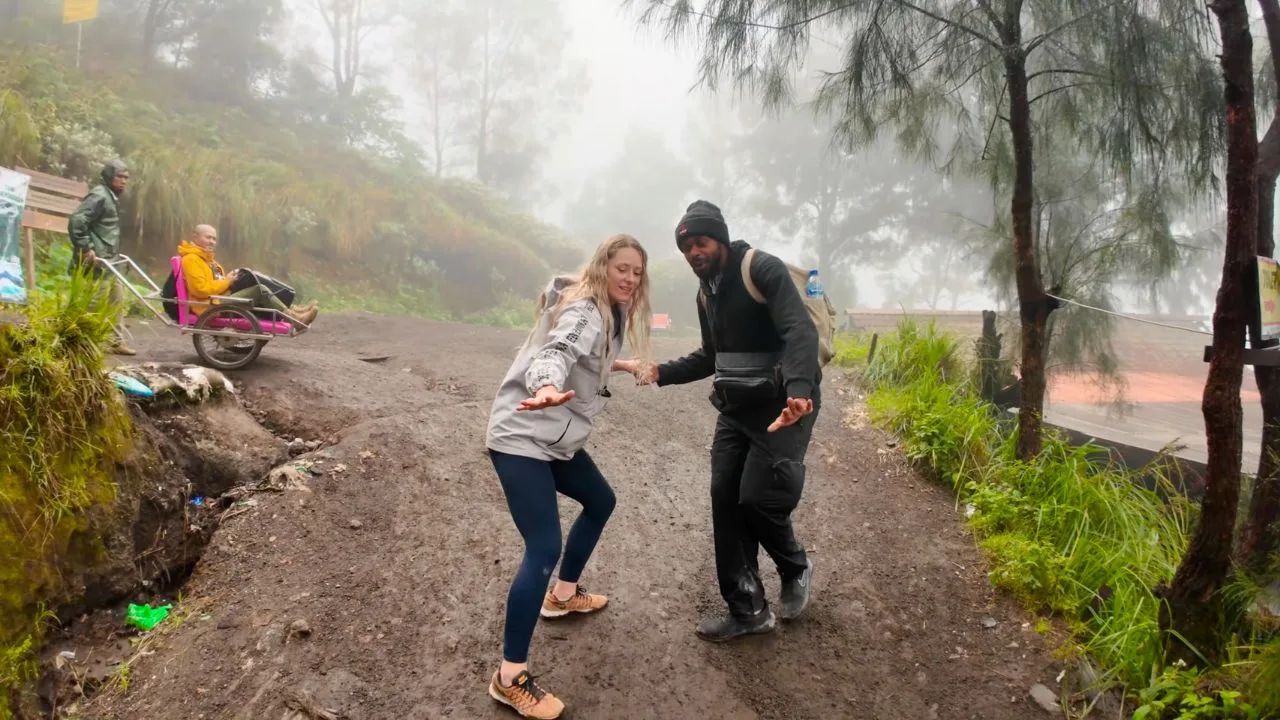
With the clouds returning, it was finally time to make our way back down the mountain.
And this is where things got unexpectedly hilarious.
The heavy rain earlier, combined with thousands of hikers, had made sections of the trail into what could only be described as a giant muddy slip-and-slide.
We were slipping everywhere.
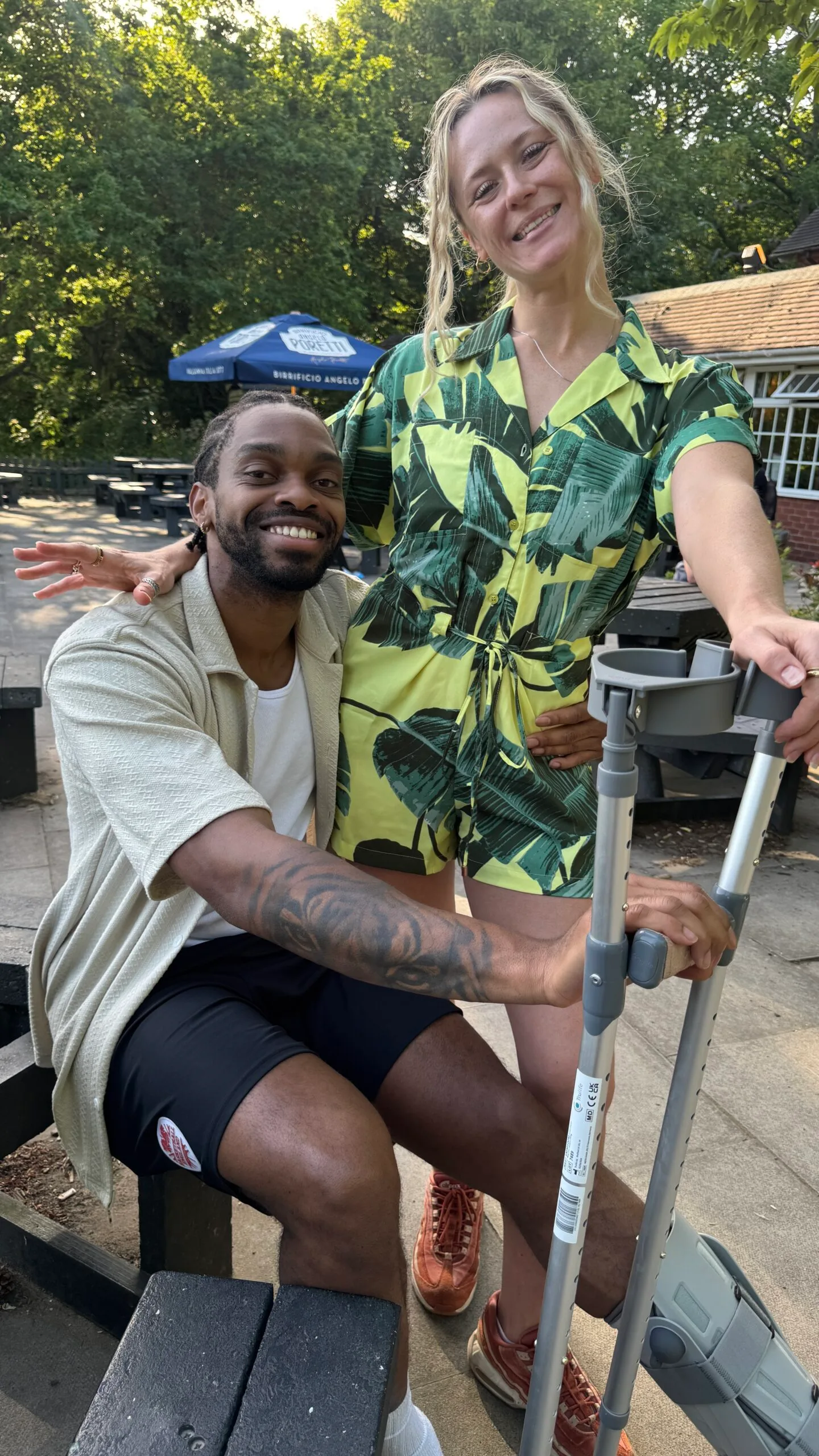
At one point, Beth started walking backwards because it genuinely felt safer than facing forward.
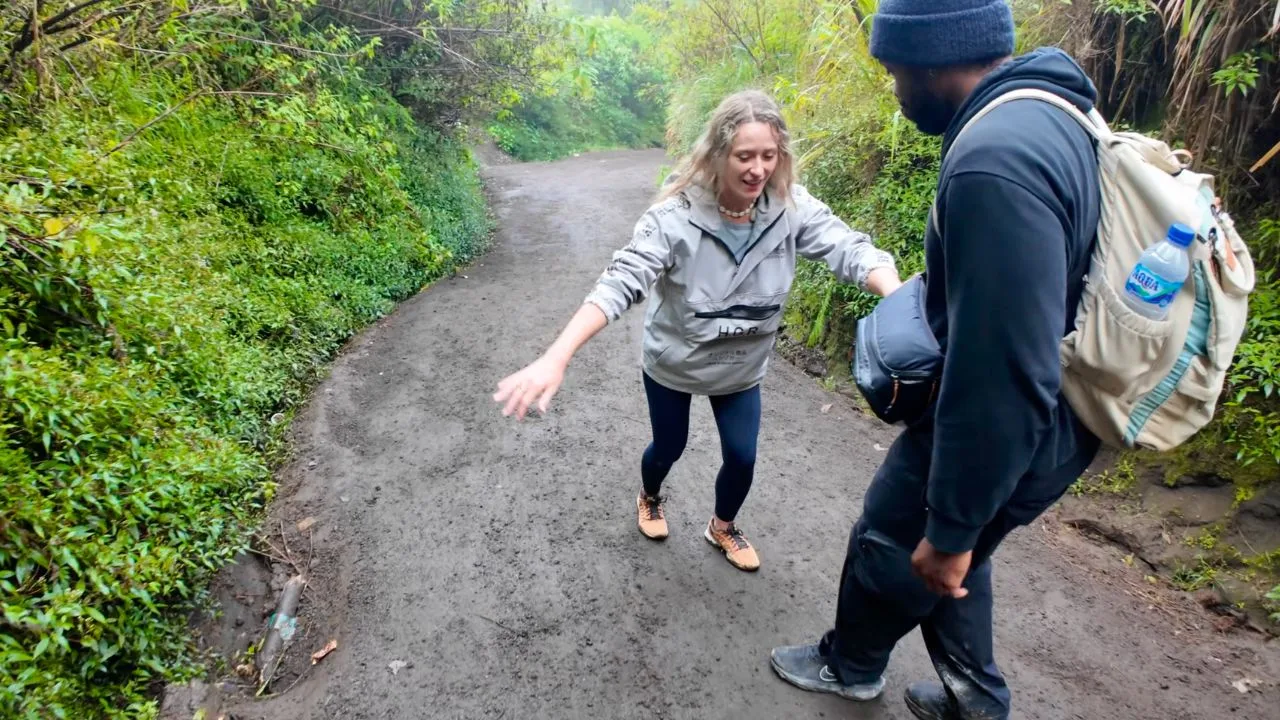
Most of the journey down involved holding onto each other and trying not to slide halfway back down the volcano.
The biggest lesson? Bring proper hiking shoes.
We cannot stress this enough. Our trainers lacked grip, and we paid the price.
Fortunately, it mostly resulted in laughter rather than disaster, but decent footwear would have made a huge difference.
The Taxi Lamborghinis
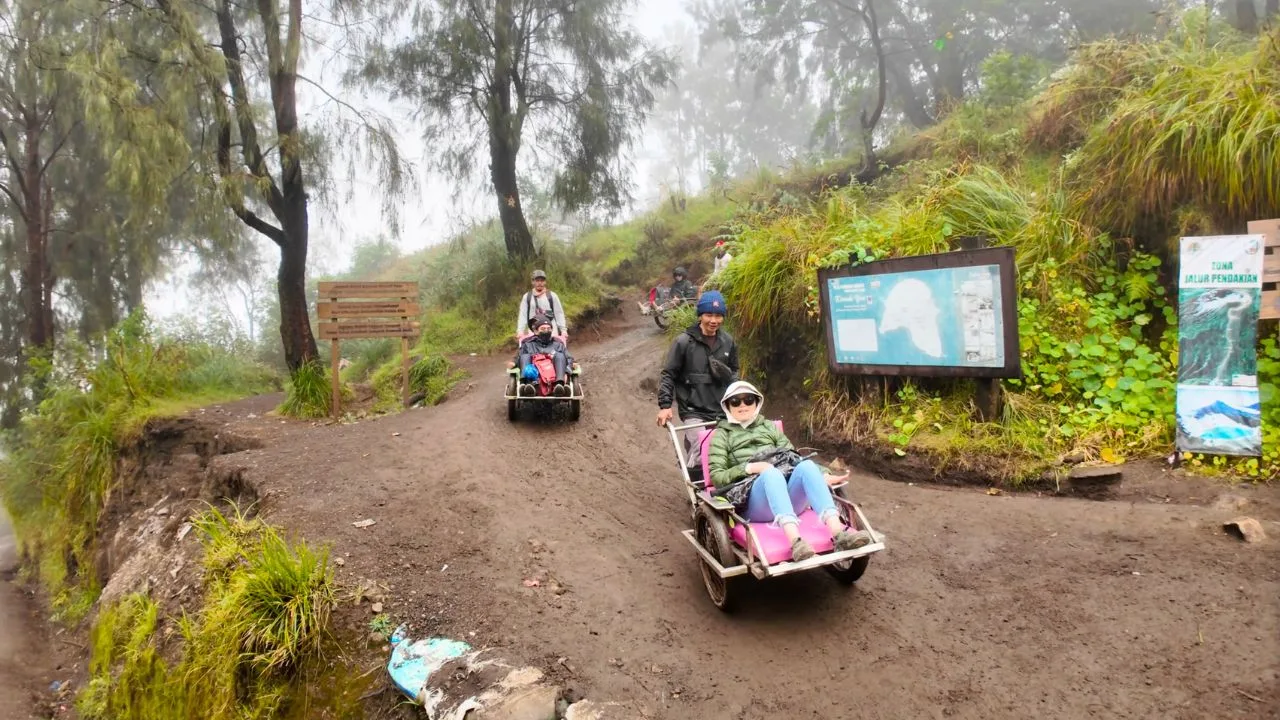
One of the most hilarious parts for us was the famous “Taxi Lamborghinis.”
Throughout the hike, we kept seeing brightly coloured hand carts being pushed up and down the mountain by local porters.
These allow visitors who aren’t able to complete the main climb on foot to still experience the volcano.
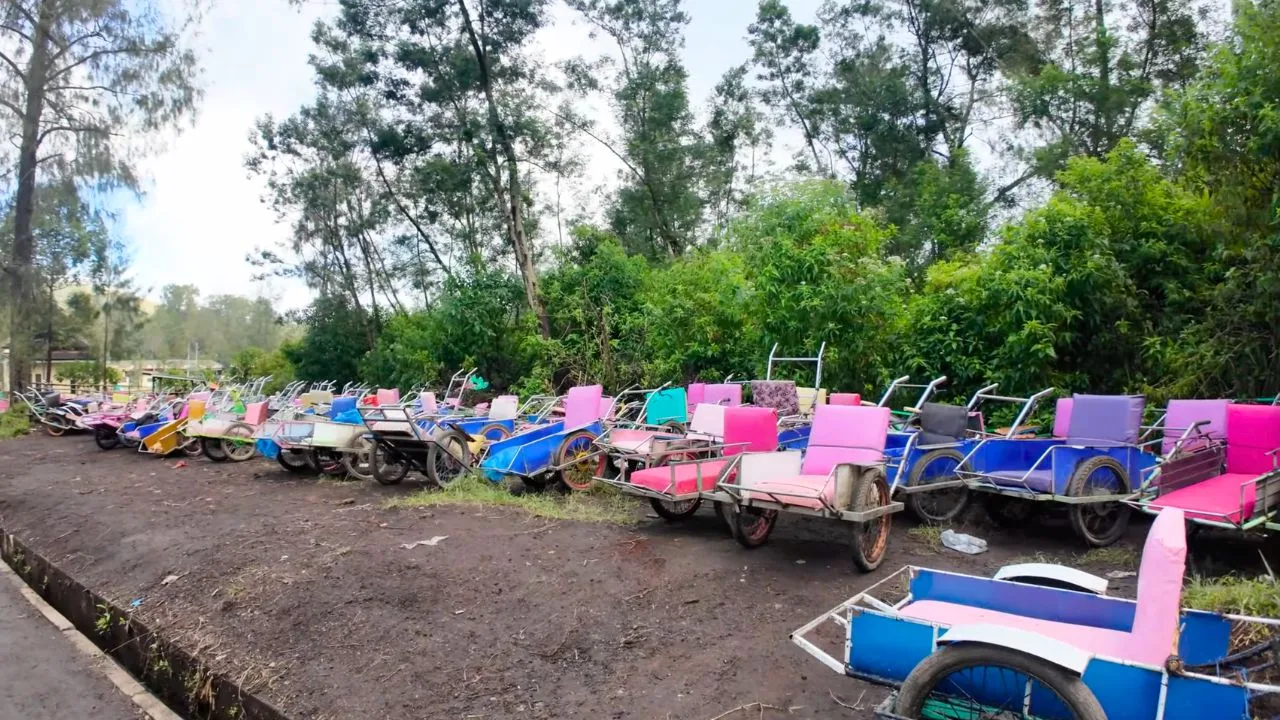
The strength of the people pushing them is honestly unbelievable.
The hike is challenging enough without carrying another person.
If you choose to use one, we’d strongly encourage leaving a generous tip because the amount of physical effort involved is incredible.
Just be aware that the Taxi Lamborghinis cannot take you down to the blue flame itself because of the steep, uneven terrain.
Things We Loved
The Blue Flame
One of the most unique natural phenomena we’ve ever seen anywhere in the world.
The Crater Lake
The colour of the water genuinely looked fake.
The Local Guides
The guides were fantastic throughout the entire experience and helped make a challenging hike feel enjoyable.
Practising Bahasa Indonesia
Some of our favourite travel moments happen during the walks between attractions, and this was no different.
The Sense Of Adventure
Rain, fog, darkness, volcanoes, sulphur smoke and unexpected views. This felt like a proper adventure from start to finish.
Pin It On Pinterest
Things To Be Aware Of
It Is Physically Demanding
In total, you’ll cover roughly:
- 3km up to the crater rim
- 1km down to the blue flame
- 1km back up
- Up to 1km around the crater
- 3km back down
It’s steep, rocky and potentially slippery… A reasonable level of fitness is definitely helpful.
The weather can change quickly
The conditions changed dramatically several times during our visit.
Rain, fog and cloud are all common BUT don’t let this put you off, as it can also change for the better very quickly as well.
It Gets Very Busy
The earlier you start, the better your chances of avoiding the largest crowds. When we got to the blue flame, it wasn’t too busy at all, but by the time we left, it was very busy.
Good Footwear Is Essential
Learn from our mistakes.
Bring shoes with excellent grip.
Useful Information
What Is Included In Most Tours?
Most organised tours typically include:
- Transport
- Entrance fees
- Local guide
- Head torch
- Gas mask
Always check exactly what’s included before booking.
Our Top Mount Ijen Tours
What Should You Bring?
- Hiking shoes
- Waterproof jacket
- Warm layers
- Cash for souvenirs and snacks
- Water
- Camera
Can You Visit Without A Guide?
Most visitors join organised tours, and local guides are compulsory due to the terrain and safety requirements.
Related Experiences
Here are some of our other adventures in East Java. We spent nearly 2 weeks in East Java alone and could easily go back. There is SO much to see!
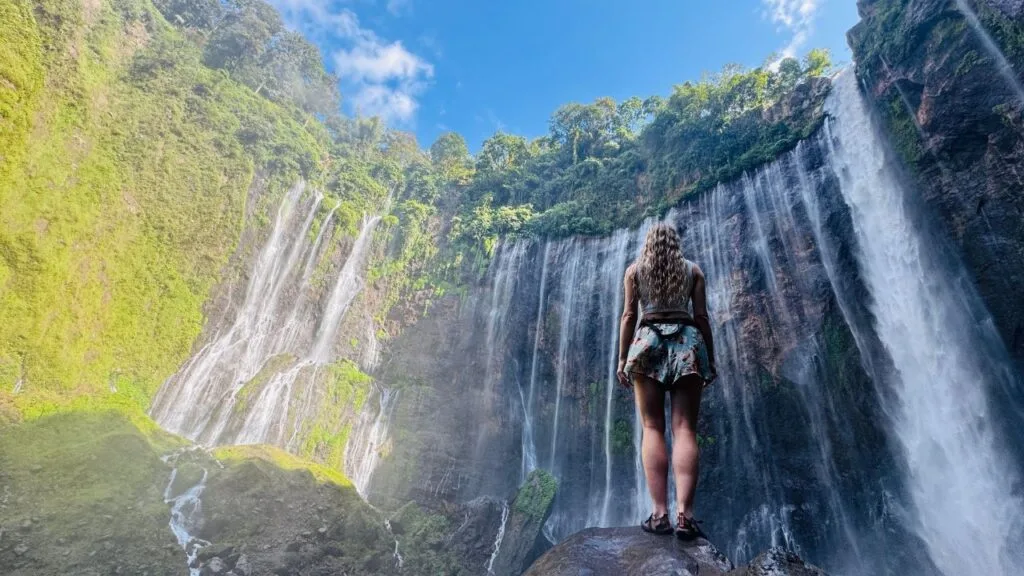
Tumpak Sewu Waterfall | Don’t Skip The Best Part!
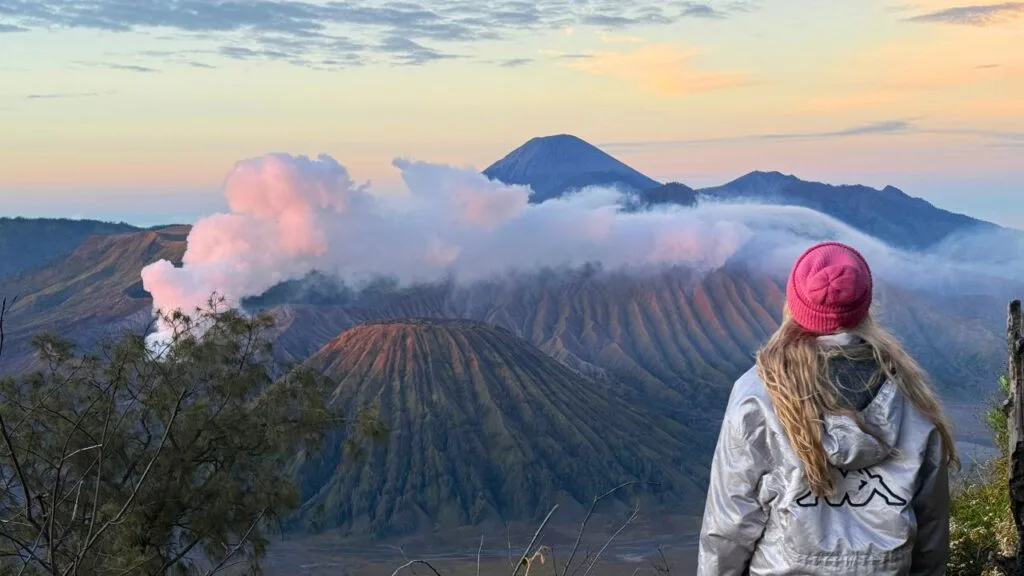
A 1AM Wake Up For Mount Bromo’s Sunrise… Was It Worth It?
Final Thoughts
We started the morning hiking into an active volcano in torrential rain.
We ended it staring into a bright turquoise crater lake above the clouds.
Not bad for a day’s work.
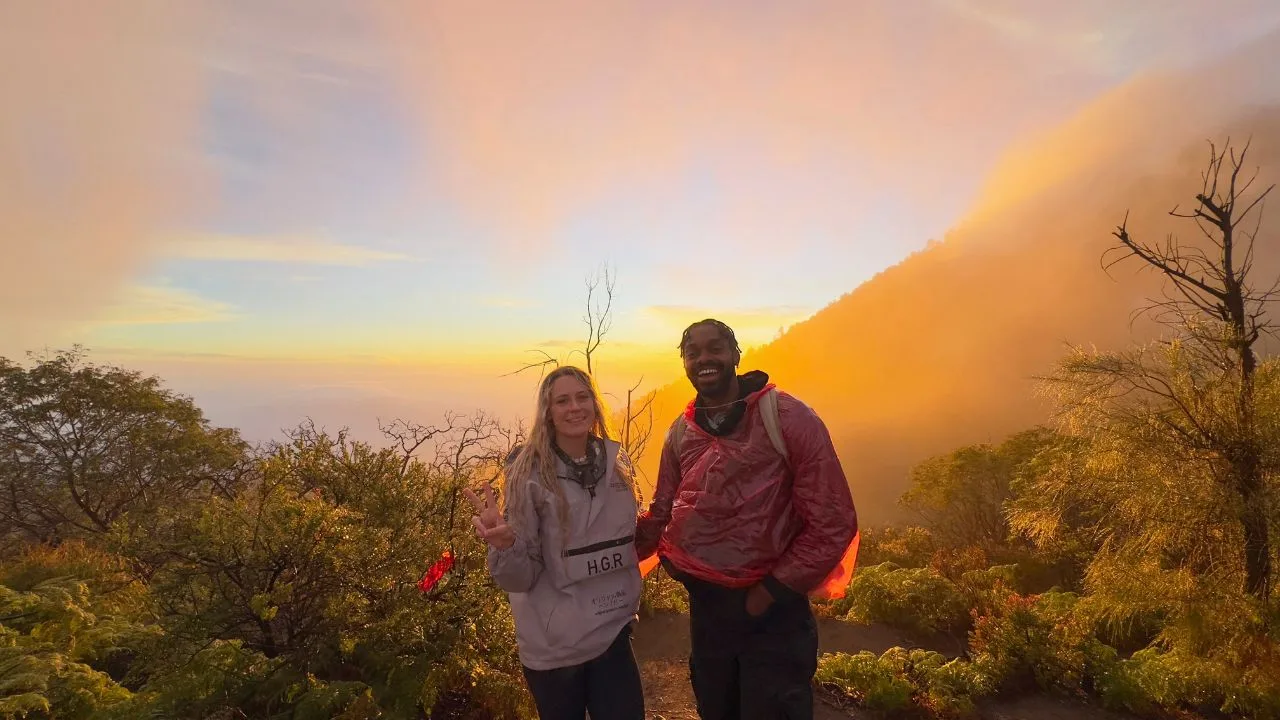
Ijen Volcano isn’t the easiest adventure in East Java.
It’s steep, muddy, crowded and requires an early start.
But it’s also one of the most incredible places we’ve ever visited, and we would genuinely do it all again in a heartbeat!
If you’re travelling through East Java and wondering whether Ijen is worth the effort, our answer is simple:
Absolutely.
Just don’t forget your hiking shoes.
Big Love
Beth and Denz